





Why Can’t I Orgasm? A Pressure-Free Guide to Orgasm Difficulty
“Why can’t I orgasm?” can feel like a very private question with a very personal accusation hidden inside it.
Am I doing something wrong? Is my body broken? Am I not attracted to my partner? Have I become too dependent on a toy? Should this be easier by now?
The short answer is that orgasm difficulty is common, complex and rarely explained by one simple cause. It can involve the kind of stimulation you receive, the time available for arousal, stress, medication, pain, hormones, body image, relationship dynamics, past experiences or a health condition. Sometimes several factors overlap. Sometimes nothing is “wrong” at all—you simply do not orgasm in the way popular culture taught you to expect.
Some people have never had an orgasm. Some can orgasm alone but not with a partner. Others notice that orgasms have become slower, less intense or suddenly unavailable after previously feeling easy. People of every gender can experience these changes.
This guide offers a calm place to start. It will help you understand different patterns of orgasm difficulty, explore pleasure without turning it into another performance test and recognise when professional support may be useful.
First: Not Every Sexual Experience Needs to End in Orgasm
Orgasm can be pleasurable and meaningful, but it is not the only measure of satisfying sex.
A sexual experience may include arousal, closeness, curiosity, laughter, relaxation, sensual touch or emotional connection without ending in climax. If you are content with that, there is no requirement to turn the absence of orgasm into a problem.
Clinically, orgasm difficulty becomes more concerning when it is persistent and causes you distress. That distinction matters. Not reaching orgasm every time is not automatically a disorder, and neither is needing a particular type of stimulation.
You are allowed to want orgasms, of course. The point is not to persuade you that they do not matter. It is to remove the idea that your body has failed whenever one does not happen. Pressure tends to make pleasure less accessible, not more.
What Is Anorgasmia?
Anorgasmia is the medical term used for absent, delayed, infrequent or noticeably less-intense orgasms despite arousal and adequate stimulation. It may be described in several ways:
- Lifelong: You have never experienced an orgasm.
- Acquired: You used to orgasm but now find it difficult or impossible.
- Situational: You can orgasm only in certain circumstances, such as during masturbation but not with a partner.
- Generalised: You have difficulty reaching orgasm in every situation.
These labels are not a home diagnosis. They are simply useful ways to describe your experience when speaking to a healthcare professional or sex therapist.
Orgasm difficulty can affect anyone. For people with penises, orgasm and ejaculation often occur together but are not exactly the same process. Someone may experience delayed ejaculation, ejaculation without the expected orgasmic feeling or orgasm without ejaculation. A doctor can help distinguish what is happening when the change is persistent or distressing.
Arousal and Orgasm Are Not the Same Thing
You can feel desire without becoming physically aroused. You can become physically aroused without feeling much desire. You can enjoy stimulation without reaching orgasm, and you can sometimes orgasm when the experience does not feel emotionally satisfying.
Sexual response is not a neat staircase that everyone climbs in the same order.
Orgasm usually becomes more likely when the body has enough time, stimulation and psychological safety to build arousal. But “enough” varies widely. The touch that works for one person may do very little for another. The same person may need a different pace, pressure or context on another day.
This is why a single trick rarely solves orgasm difficulty. The more useful question is not only “Why can’t I orgasm?” but also:
- When can I orgasm, if ever?
- What kind of touch feels genuinely pleasurable?
- What happens in my mind and body as arousal builds?
- What changed around the time orgasms became more difficult?
- Am I experiencing pain, dryness, numbness or another symptom?
- Do I feel safe, unhurried and able to communicate?
Your answers can reveal patterns without blaming you or your partner.
Penetration Alone Is Often Not Enough
One of the most persistent sexual myths is that vaginal penetration should reliably produce orgasm.
For many people with vulvas, direct or indirect clitoral stimulation is an important part of reaching orgasm. Penetration can feel pleasurable, intimate or deeply satisfying while still not providing the type, location or consistency of stimulation needed for climax.
This is anatomy, not inadequacy.
The externally visible clitoral glans is only one part of a larger clitoral structure. Depending on anatomy, position and movement, vaginal penetration may provide some indirect clitoral stimulation—but often not enough on its own. If you want to understand the different areas more clearly, Dear Desire’s guide to clitoral, G-spot and A-spot pleasure offers a simple overview.
If you orgasm through clitoral touch, oral stimulation, a vibrator or a particular pressure pattern but not through penetration alone, your body is not malfunctioning. You have learned something useful about how it responds.
Try treating clitoral stimulation as part of sex rather than an optional extra added when penetration “fails.” Hands, a partner’s touch or a compact external toy can be used before, during or instead of penetration.
Common Reasons Orgasm Feels Difficult
There is rarely a single universal cause. The following possibilities can help you identify which areas deserve attention.
1. The stimulation does not match your body
You may be receiving plenty of touch, but not the touch your body needs.
Useful variables include:
- Direct versus indirect clitoral contact
- Light touch versus firmer pressure
- A steady rhythm versus changing patterns
- Precise stimulation versus a broad sensation
- Fast versus slow movement
- Continuous contact versus pauses
- External, internal or combined stimulation
- The angle and position of penetration
Frequent switching can interrupt a build-up that needs consistency. At other times, an unchanging sensation becomes too intense, numb or uninteresting. Neither preference is more advanced or more correct.
If something is beginning to work, you do not need to introduce a dramatic new technique simply because the moment feels close. “Keep doing exactly that” is excellent sexual communication.
2. Your body needs more time to become aroused
Rushing can make orgasm feel like trying to sleep while watching the clock.
Some people need a long period of non-genital touch, fantasy, kissing, conversation or external stimulation before their bodies feel ready for more direct contact. Hormonal changes, fatigue, stress, medication and ageing can all change the time required.
There is no correct length of foreplay, and “foreplay” does not need to be treated as the short opening act before penetration. It can be the main experience.
Create more time than you think you need. Remove the expectation that penetration must begin on schedule. If the body is still warming up, that is information—not delay.
3. Orgasm has become a performance target
The moment you start monitoring whether an orgasm is happening, you may move from experiencing sensation to evaluating it.
Thoughts can sound like:
- Is this taking too long?
- Is my partner getting bored?
- Should I be closer by now?
- Why did this work last time?
- What if it does not happen again?
This mental observation is sometimes called spectatoring: watching and judging yourself instead of remaining inside the experience. The harder you chase the finish line, the more distant it may feel.
Try agreeing in advance that orgasm is welcome but not required. A session can end when you feel satisfied, tired, curious to stop or ready to change activities. Removing the pass/fail test often creates more room for arousal.
4. Stress, fatigue and distraction are occupying the system
Arousal asks for attention. Work pressure, caregiving, financial worry, poor sleep, unresolved conflict or a noisy environment can compete with that attention.
You do not need a perfectly empty mind. You may simply need conditions that make it easier to return to sensation.
That could mean:
- Choosing a time when you are less exhausted
- Putting phones out of reach
- Creating privacy rather than fearing interruption
- Taking a shower or changing clothes to mark the transition out of daily mode
- Beginning with massage or breathing rather than immediate genital touch
- Naming the worry aloud instead of pretending it is not present
If stress is chronic, changing the bedroom routine may help only partly. Broader mental-health or practical support may also matter.
5. You do not feel fully safe, respected or able to communicate
Pleasure can be difficult when part of you is monitoring a partner’s reaction, anticipating criticism or tolerating activities you do not really want.
Emotional safety does not require a perfect relationship. It does require consent, respect and room to change your mind.
Ask yourself:
- Can I say slower, softer or stop without consequences?
- Can I ask for what I like without being mocked?
- Do I feel pressure to perform an orgasm for reassurance?
- Am I participating because I want to, or because refusal feels difficult?
- Is there unresolved hurt or conflict affecting intimacy?
A toy cannot repair a lack of safety or communication. Couples counselling or sex therapy may be more useful than trying increasingly complicated techniques.
6. Pain, dryness or irritation is interrupting pleasure
It is difficult to surrender to pleasure when the body is protecting itself from pain.
Vaginal or vulval dryness, painful penetration, pelvic-floor tension, skin irritation, endometriosis, infection and other conditions can all affect arousal and orgasm. Pain may also create understandable anticipation: even before touch hurts, the body may brace for it.
Lubricant can reduce friction, but persistent pain is not simply a lubrication problem. Do not use more force, a stronger toy or numbing products to push through it. Stop and seek professional advice.
When friction is the main concern, a compatible water-based lubricant is a versatile option for many toys and condoms. If you are unsure which formula suits your body or toy, the guide to water-based, silicone and other lubricants explains the main differences. Check individual labels and toy-care instructions rather than assuming every combination is compatible.
7. Hormonal and life-stage changes are affecting response
Pregnancy, the postpartum period, breastfeeding, perimenopause and menopause can change desire, genital sensation, lubrication, comfort and the time needed to reach orgasm.
These changes do not mean pleasure is over. They may mean the routine that worked previously needs to be adjusted. More warm-up time, gentler stimulation, lubricant or different positions may help, depending on the cause.
If the change is persistent, distressing or accompanied by pain, bleeding, significant dryness or other symptoms, speak to a healthcare professional. Personalised treatment may address an underlying hormonal or medical issue more effectively than experimenting alone.
8. Medication may be playing a role
Some medicines can affect desire, arousal and orgasm. Antidepressants—particularly some selective serotonin reuptake inhibitors—are well-known examples, but certain blood-pressure medicines, antipsychotics, antihistamines, cancer treatments and other medications may also contribute.
Do not stop or reduce prescribed medication on your own. Sudden changes can be unsafe and may worsen the condition being treated.
Instead, tell the prescribing professional what has changed and when it began. They can review timing, dose, alternatives and other possible causes. Sexual side effects are legitimate healthcare concerns, not an embarrassing inconvenience you are expected to tolerate silently.
9. A health condition or pelvic-floor problem may be involved
Orgasm relies on the nervous system, blood flow, hormones, muscles, sensation and psychological response. Conditions affecting any of these systems may influence sexual function.
Possible contributors include diabetes, thyroid disorders, neurological conditions, pelvic surgery, cancer treatment, chronic pain, pelvic-floor dysfunction and genital or pelvic trauma. This does not mean orgasm difficulty proves that you have a medical condition. It means a new or persistent change deserves a broader assessment when there is no obvious explanation.
Pelvic-floor muscles can be too tense, poorly coordinated or weak. Automatically doing more Kegel exercises is not appropriate for everyone; strengthening an already overactive pelvic floor may not address the real problem. A pelvic-health physiotherapist can assess what your muscles actually need.
10. Shame, body image or past experiences are present
Sex-negative messages can remain in the body even when you consciously reject them. You may have learned that pleasure is selfish, masturbation is shameful, certain bodies are undesirable or sexual expression must look a particular way.
Body-image concerns can also turn attention towards appearance: how your stomach looks, what sounds you are making or whether a partner is judging you.
Past unwanted experiences or trauma may affect safety, arousal and control. You never need to force yourself through a sexual exercise to prove that you are healing. A trauma-informed therapist or qualified sex therapist can help at a pace that protects your agency.
If You Can Orgasm Alone but Not with a Partner
This is a common situational pattern, not proof that your relationship is doomed or that you have “trained your body wrong.”
Solo pleasure often provides several advantages:
- You know the exact pressure and position you are creating.
- You can maintain a rhythm without explaining it.
- There is no concern about another person’s patience or feelings.
- You can focus entirely on your own sensations.
- The setting and timing are under your control.
The goal is not to abandon what works alone. It is to translate useful information into partnered intimacy. If bringing a toy into that conversation feels awkward, start with this communication-first guide to introducing sex toys into a relationship.
You might guide a partner’s hand, demonstrate the rhythm, place your hand over theirs or continue stimulating yourself while sharing the experience. A small external toy can also preserve consistency while leaving room for kissing, touch or penetration.
Try saying:
- “I need steady pressure once I get close.”
- “Softer is better for me at the beginning.”
- “Please stay in that exact spot.”
- “I would like to use my toy while we are together.”
- “I’m enjoying this even if I don’t orgasm.”
Specific information is kinder than asking a partner to guess.
If You Have Never Had an Orgasm
Not knowing what an orgasm feels like can make the search confusing. You may wonder whether you missed it or whether you are aiming for a cinematic event that your body will never produce.
Orgasms vary. Some feel powerful and unmistakable; others feel like a smaller release, a series of contractions, a wave of pleasure or a brief shift in tension. Intensity can change from one experience to another.
Begin with curiosity rather than a mission.
Create private, unhurried time
Choose a time when interruption is unlikely. Privacy can matter as much as technique.
Explore beyond the genitals
Notice which kinds of touch feel relaxing, exciting, neutral or unpleasant. Building body awareness is useful even when orgasm does not occur.
Learn the external anatomy
Use a mirror if that feels comfortable. Understanding where the clitoral glans, hood, inner labia and outer labia are can make exploration less mysterious.
Begin indirectly
Direct clitoral touch can feel overwhelming before arousal builds. Try pressure over underwear, the palm of your hand or touch beside the clitoris first.
Repeat what feels promising
You do not need to keep changing technique. Many bodies respond to predictable, consistent stimulation.
Stop before frustration takes over
There is no benefit in continuing until your body feels sore or your mind feels defeated. End with something pleasant and try again another day.
Learning can take time. The absence of an immediate result does not mean your body is incapable of orgasm.
Can a Vibrator Help?
A vibrator can be useful because it provides consistent stimulation that hands and tongues cannot reproduce in exactly the same way. It may help you identify the location, pressure and intensity your body prefers. If this is your first toy, begin with the practical beginner’s guide to choosing a vibrator.
It is not a guaranteed treatment, and stronger is not automatically better.
If you want to experiment, look for:
- Several intensity levels, including a genuinely gentle starting point
- Controls you can change without breaking concentration
- A shape suited to precise or broad stimulation, depending on your preference
- A comfortable weight and grip
- Clear material and care information—this body-safe sex-toy materials guide can help you compare common options
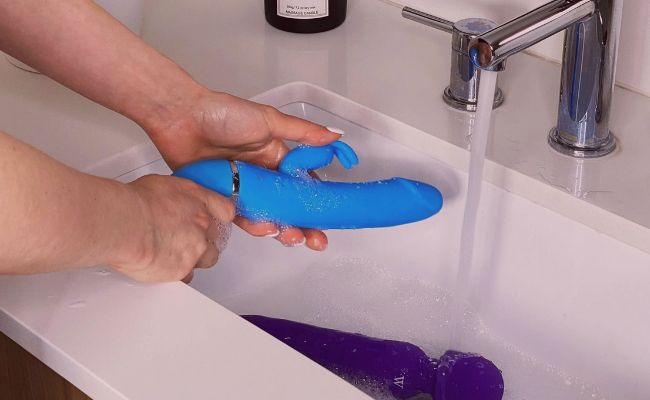
- A surface that can be cleaned properly
Start on a low setting and explore around the vulva before placing the toy directly on the clitoris. Try the side of the toy, use it over underwear or move between direct and indirect contact.
If the area feels numb or overstimulated, pause. Turning the power higher is unlikely to make sensation clearer. Temporary overstimulation does not mean you have permanently damaged your body, but persistent numbness or an unexplained change should be assessed.
Dear Desire’s clitoral-vibrator collection includes precise bullets, broader wands and air-pulse designs. Choose according to the sensation and level of control you want—not a product promise that it will “make” you orgasm.
A Pressure-Free Exploration Exercise
This exercise is not medical treatment and does not need to end in orgasm. Its purpose is to gather information.
Step 1: Set a short, flexible window
Give yourself enough time not to rush, but do not turn the session into an endurance test.
Step 2: Decide that orgasm is optional
The goal is to notice three things that feel pleasant, interesting or relaxing.
Step 3: Begin with non-genital touch
Explore the neck, chest, stomach, thighs or anywhere else that feels welcome. Notice pressure, temperature and pace.
Step 4: Move towards external genital touch slowly
Begin around the outer vulva. Approach more sensitive areas only as arousal builds.
Step 5: Change one variable at a time
Try altering pressure, speed, location or the type of touch—but not all at once. This makes it easier to understand what helped.
Step 6: Stay with pleasure when you find it
Consistency can be more useful than novelty. Let the sensation build without constantly checking whether orgasm is close.
Step 7: End without grading yourself
Record what felt good mentally or write it down privately. “I preferred broad pressure over direct touch” is a successful result even without climax.
How to Talk to a Partner Without Creating More Pressure
A partner may interpret orgasm difficulty as evidence that they are unattractive or unskilled. Reassurance helps, but you do not need to protect their confidence by performing pleasure you do not feel.
Have the conversation outside the sexual moment when neither person is waiting for an immediate result.
You could say:
- “I want us to focus on what feels good rather than whether I finish.”
- “I’m learning that I need more clitoral stimulation than penetration gives me.”
- “When you keep asking whether I’m close, I feel pressure and lose the sensation.”
- “I’d like to show you the rhythm that works when I’m alone.”
- “This change may have a medical or medication-related cause, and I want to get advice.”
The conversation should not become a project in which the partner takes responsibility for producing an orgasm. Pleasure is collaborative, but bodies are not machines with the correct hidden button.
What Not to Do
When orgasm feels unavailable, frustration can lead to strategies that make things worse.
Avoid:
- Pushing through pain or irritation
- Using numbing products to tolerate uncomfortable penetration
- Increasing vibrator intensity after sensation has become numb
- Faking orgasm to end the encounter while leaving the underlying pressure unchanged
- Comparing your response with pornography, films or someone else’s body
- Treating penetration as the only “real” sex
- Buying multiple products before understanding the stimulation you prefer
- Stopping prescribed medication without medical advice
- Blaming yourself or your partner before considering the full picture
A product can expand your options. It cannot replace communication, emotional safety or appropriate healthcare.
When to Speak to a Healthcare Professional
Consider making an appointment if:
- You used to orgasm and the ability changed suddenly or persistently
- Orgasm difficulty is causing significant distress
- You have pain, dryness, numbness, reduced genital sensation or involuntary muscle tightening
- The change began after starting or adjusting medication
- You have symptoms of a hormonal, neurological or pelvic condition
- You have had pelvic surgery, childbirth, cancer treatment or genital trauma
- You are concerned about ejaculation, erection, arousal or desire as well as orgasm
- Past sexual experiences or anxiety are affecting your wellbeing
A healthcare professional may ask about your general health, medication, sexual history, symptoms, relationships and the kinds of stimulation you have tried. Depending on the concern, they may suggest an examination, tests or referral to a gynaecologist, urologist, pelvic-health physiotherapist, psychologist or qualified sex therapist.
Treatment depends on the cause. It may involve sexual education, changes to stimulation, therapy, pelvic-floor treatment, management of pain or dryness, review of medication or treatment of an underlying condition.
You deserve to be taken seriously. Sexual function is part of health.
Frequently Asked Questions About Orgasm Difficulty
Is it normal to have never had an orgasm?
It is more common than many people realise. It is not automatically a medical disorder unless it causes distress, but you can seek help if you want support understanding your body or ruling out contributing factors.
Why can I orgasm alone but not during sex?
Solo pleasure offers precise control, privacy and less performance pressure. Partnered stimulation may differ in location, rhythm, duration or emotional context. Try translating what works alone rather than abandoning it.
Why can’t I orgasm from penetration?
Penetration alone does not provide enough clitoral stimulation for many people with vulvas. Adding direct or indirect clitoral touch does not mean penetration failed; it means you are working with your anatomy.
Can stress stop an orgasm?
Yes. Stress, anxiety, exhaustion and distraction can interfere with arousal and the attention needed to build pleasure. This does not mean the difficulty is imaginary—the brain and body are part of the same sexual response.
Can antidepressants make orgasm difficult?
Some antidepressants and other medicines can delay or prevent orgasm. Do not stop medication yourself. Ask the prescriber to review the side effect and discuss safe options.
Can menopause affect orgasm?
Hormonal changes around perimenopause and menopause can affect arousal, lubrication, sensation and orgasm. Persistent or distressing changes deserve professional support, especially when accompanied by pain or dryness.
Can a vibrator make me unable to orgasm without it?
Using a vibrator does not mean your body is damaged. You may become familiar with a particular reliable sensation, just as you can become familiar with any masturbation technique. If you want more variety, change the placement, intensity, pace or type of stimulation gradually.
Should I use the strongest vibrator setting?
Not necessarily. Very intense stimulation can become overwhelming or temporarily numbing. Begin low and increase only while the sensation remains pleasurable.
Does needing a toy mean my partner is not good enough?
No. A toy provides a type of stimulation, not affection, communication or connection. Many couples include toys because bodies respond to different sensations—not because a person is being replaced.
Can too much lubricant make orgasm harder?
Lubricant reduces friction, which often improves comfort. Some people prefer more friction or pressure for a particular kind of stimulation, so adjust the amount to your comfort. Never reduce lubricant to the point of pain or tissue irritation.
Are weak orgasms a sign of a problem?
Orgasm intensity naturally varies. A persistent, distressing change—especially with pain, numbness, medication changes or other symptoms—is worth discussing with a healthcare professional.
Can pelvic-floor exercises help?
They may help some people, but not every pelvic floor needs strengthening. Muscles can also be overly tense or poorly coordinated. Seek an assessment before assuming that more Kegels are the answer.
What kind of professional should I see?
A GP, gynaecologist or urologist can begin a medical assessment. Depending on the cause, a pelvic-health physiotherapist, psychologist, couples therapist or qualified sex therapist may also help.
What if I enjoy sex without orgasm?
Nothing needs to be fixed simply because an experience does not match someone else’s definition of successful sex. If you are comfortable and satisfied, orgasm can remain an option rather than an obligation.
Your Body Is Not a Deadline
Orgasm difficulty does not prove that you are broken, sexually inexperienced, incompatible with your partner or incapable of pleasure.
Sometimes the body needs different stimulation. Sometimes it needs more time or less pressure. Sometimes pain, medication, hormones, stress, pelvic-floor function or another health factor needs proper attention. The answer may involve self-exploration, communication, a pleasure product, professional support or a combination of these.
Begin with curiosity. Notice what feels good before asking whether it is leading anywhere. Keep the techniques that suit your body and release the ones you were told should work.
Pleasure is not an exam, and orgasm is not proof that you passed.
Leave a comment
This site is protected by hCaptcha and the hCaptcha Privacy Policy and Terms of Service apply.