




How to Introduce Sex Toys Into Your Relationship: A Communication-First Guide
Bringing up sex toys with a partner can feel more vulnerable than buying one for yourself.
You may be excited by the idea but worried that your partner will hear something you are not saying: that they are not enough, that your sex life is failing or that you want to replace intimacy with a device.
In most cases, the real challenge is not the toy. It is finding language that makes your intention clear while leaving your partner genuinely free to respond.
The healthiest way to introduce sex toys into a relationship is to treat the conversation as an invitation, not a verdict. You are sharing a curiosity and asking whether your partner would like to explore it with you. You are not presenting a solution to a problem they did not agree exists.
This guide will help you start that conversation, respond to common worries, choose a first toy together and create a shared experience built around consent, comfort and connection.
How to Introduce Sex Toys Into a Relationship: The Quick Guide
| Stage | A helpful approach |
|---|---|
| Before the conversation | Understand what interests you and why |
| Choosing the moment | Talk in a relaxed, private setting outside sex |
| Opening the topic | Ask whether your partner is comfortable discussing an idea |
| Explaining your interest | Use “I” language and lead with curiosity |
| Inviting their response | Ask an open question and make room for hesitation |
| Discussing consent | Agree that either person can pause, change or stop at any time |
| Choosing a toy | Browse together and prioritise a shared goal |
| First use | Keep the setting familiar and expectations low |
| Afterwards | Discuss what felt good, neutral or uncomfortable |
| If the answer is no | Respect it without persuading, sulking or buying the toy anyway |
The aim is not to secure a yes. The aim is to create enough safety for both people to be honest.
Why Talking About Sex Toys Can Feel So Personal
A sex toy is an object, but the meanings people attach to it can be deeply personal.
One person may see a vibrator as a playful addition. Another may hear, “My body cannot give you what you need.” One person may associate toys with self-care, while another may connect them with shame, secrecy, pornography, past pressure or experiences they do not want to repeat.
Even partners who communicate well in daily life can struggle when a conversation touches on desire. Sexual preferences are often tied to identity, confidence, body image and the fear of rejection. That is why a casual suggestion can sometimes produce a surprisingly emotional response.
This does not mean the idea was wrong to raise. It means the conversation deserves care.
Try not to predict your partner’s reaction before they have had a chance to speak. They may be enthusiastic, uncertain, curious but nervous, interested in one type of toy and uncomfortable with another, or simply not ready. Each of those responses gives you useful information about how to proceed together.
Clarify What You Want Before You Bring It Up
You do not need a detailed proposal, but it helps to understand the feeling behind your interest.
Ask yourself:
- Am I looking for novelty, more focused stimulation or a playful shared activity?
- Is there a sensation I know I enjoy and want to include during partnered sex?
- Do I want a toy we use together, or do I mainly want my partner to feel comfortable with my solo toy use?
- Am I curious about giving my partner a different kind of pleasure?
- Do I have one specific product in mind, or would I rather browse together?
- Am I hoping the toy will solve a wider difficulty that we have not discussed directly?
That last question matters.
If sex has become painful, desire has changed dramatically, arousal feels difficult or one person is regularly unable to enjoy intimacy, a toy may be helpful—but it should not be used to avoid the underlying conversation. Persistent pain, sudden sexual changes or ongoing distress may also deserve support from a qualified healthcare professional or sex therapist.
Knowing your intention helps you explain the idea without making your partner guess.
Choose a Calm Moment Outside the Bedroom
For many couples, the easiest time to discuss a new sexual idea is when neither person is already naked, aroused, rushed or emotionally activated.
A quiet evening, relaxed drive, private walk or comfortable moment on the sofa may feel safer than introducing a new toy in the middle of sex. Outside the bedroom, your partner has more room to think and less reason to interpret the suggestion as a criticism of what is happening right now.
Avoid raising it:
- During an argument
- Immediately after disappointing or uncomfortable sex
- As a surprise in front of other people
- When either person is intoxicated
- When your partner is tired, distracted or under pressure
- By revealing that you have already bought a shared toy without discussing it
There is no perfect setting, and established couples with very open sexual communication may enjoy spontaneous suggestions. The important part is that the timing allows a genuine answer rather than making someone feel cornered.
Ask Permission to Start the Conversation
A small consent check at the beginning can lower the pressure immediately.
You might say:
- “Can I share something I’ve been curious about?”
- “Would you be comfortable talking about something we could try together?”
- “I saw something that made me think about our sex life in a fun way. Is now a good time to talk about it?”
- “I’d like to ask how you feel about sex toys. There’s no pressure, I’m genuinely interested in your thoughts.”
This does not make the conversation overly formal. It shows that you care about your partner’s emotional readiness, not only the answer you hope to receive.
If they say it is not a good moment, ask whether there is another time that would suit them. If they do not want to discuss it at all, respect that boundary.
Lead With Curiosity, Not Criticism
The same desire can sound completely different depending on how it is framed.
Compare these two approaches:
“You never give me enough stimulation, so I think we need a vibrator.”
“I’ve been curious about using a small vibrator together. Would you be open to exploring that with me?”
The first statement evaluates your partner’s performance. The second shares your interest and invites a conversation.
Use language that starts with your own curiosity:
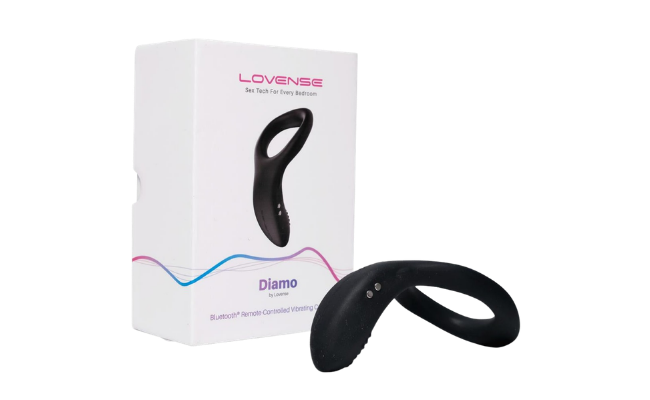
- “I’ve been wondering what a remote-control toy might feel like for us.”
- “I really enjoy what we already do, and I’d love to explore another kind of sensation together.”
- “I read about couples choosing a toy together, and the idea sounded playful. How does that feel to you?”
- “I know I enjoy external vibration, and I’d like to see whether including it together could be fun for both of us.”
- “I’d love to learn more about what feels good for you. Would browsing a few options together feel comfortable?”
Curiosity creates room for discovery. Criticism makes the other person feel as though they have been given a problem to fix.
Make It Clear That a Toy Is an Addition, Not a Replacement
One of the most common concerns is that a toy will compete with a partner.
That comparison is rarely useful. A vibrator, ring, suction toy or dildo creates a particular type of sensation; it does not provide affection, attentiveness, humour, trust, warmth or emotional connection. A person and a product are not applying for the same role.
If you sense insecurity, say what the toy means to you:
- “This isn’t about replacing anything you do. I want us to have another option to explore together.”
- “I’m attracted to you. The toy is something I’d like to add to the experience, not use instead of being close to you.”
- “I don’t expect a toy to create intimacy for us. I think choosing and learning together could be part of the intimacy.”
- “I’d like us both to be involved. We can decide together how or whether it fits.”
Reassurance should be honest rather than automatic. If there is a sexual need you have not been able to discuss, hiding it behind “just for fun” may create more confusion later. You can be kind without pretending that every desire is completely casual.
Ask What the Idea Brings Up for Your Partner
After sharing your interest, pause.
Do not fill every silence with more reasons they should agree. Give your partner enough space to notice their actual response.
Useful open questions include:
- “What is your first reaction?”
- “Is there anything about the idea that feels exciting or uncomfortable?”
- “Have you ever thought about using a toy together?”
- “Are there types of toys that feel more approachable than others?”
- “What would help this feel safe and low-pressure for you?”
- “Would you like time to think before answering?”
Listen for the concern beneath the first words. “I don’t know” may mean they need information. “Why do you need that?” may reflect insecurity. A joke may be a way of managing embarrassment. A quick yes may still need a later conversation about boundaries.
You can ask for clarity, but do not interrogate your partner until they produce the response you want.
Useful Conversation Starters for Different Situations
| If you want to… | You could say… |
|---|---|
| Suggest a first toy | “I’ve been curious about trying a small external toy together. Would you like to look at a few options with me?” |
| Share an existing solo toy | “I have a toy I enjoy on my own. Would you be interested in seeing how I use it, or would you prefer that it stays part of my private time?” |
| Explore remote control | “The idea of giving you control sounds exciting to me. Is that something you would enjoy, or would you rather I keep control?” |
| Focus on your partner’s pleasure | “I’d love to learn more about the sensations you enjoy. Would a toy feel like a fun way to explore, or not really?” |
| Add vibration during penetration | “I enjoy penetration with you, and I also like external stimulation. Would you be comfortable combining them?” |
| Browse without committing | “Could we look at a few toys together just to understand the options? We do not have to buy anything.” |
| Revisit a previous hesitation | “You said you wanted time to think about toys. Would you like to revisit it, or should I leave the topic alone?” |
| Discuss solo use | “I want us to be able to talk openly about masturbation and toys. Can we share what privacy and reassurance would feel right for each of us?” |
Use these as starting points, not scripts you must deliver perfectly. Your natural voice will usually feel more trustworthy than polished wording.
What If Your Partner Feels Inadequate?
Do not dismiss the feeling with “That’s ridiculous.” Even when the fear is based on a misunderstanding, the emotion is real.
Start by acknowledging it:
“I can understand why it might sound as though I’m comparing you with a toy. That isn’t how I see it.”
Then explain the distinction. A toy may make one kind of stimulation easier or more consistent, while a partner brings responsiveness, variation and connection. Using one does not erase the value of the other.
It may also help to centre collaboration. Ask whether your partner would like to hold the toy, control the setting, watch you use it, receive it themselves or simply remain close while you use it. Involvement should be an option, not another obligation.
Avoid trying to reassure them by promising an outcome such as a guaranteed orgasm. That can turn the first experience into a test for both of you.
What If Your Partner Worries About Being Pressured?
Make the choices smaller.
Agreeing to discuss toys is not agreeing to buy one. Browsing is not consent to use. Buying is not consent to use that evening. Trying a toy externally is not permission to use it internally. Enjoying it once does not create permanent consent.
You can say:
“We can take this one step at a time. Looking does not commit us to buying, and buying does not commit us to using it. Either of us can change our mind at any stage.”
Then make that statement true through your behaviour. Do not repeatedly bring up the toy after your partner asks for space, use money spent as leverage or treat hesitation as something they must overcome for you.
What If Your Partner Says No?
A no is a complete response, not the beginning of a sales presentation.
You may feel disappointed, especially if sharing the desire took courage. You are allowed to have that feeling. What matters is not turning your disappointment into pressure.
A respectful response could be:
“Thank you for being honest. I won’t pressure you. If you ever want to talk about it again, you can let me know.”
If you need to understand the boundary, ask one calm question rather than challenging it:
“Is the boundary about using toys together, discussing them, or this particular type of toy?”
Your partner might be uncomfortable with penetration but open to external vibration. They may not want remote control but feel comfortable holding a small bullet themselves. They may support your solo use while not wanting to participate. They may also be uninterested in all shared toy use.
Respect the boundary they actually give you. Do not convert a specific no into a broader rejection or a broad no into permission to search for a loophole.
If a shared sexual interest is deeply important to one person and firmly unwanted by the other, the issue may require an honest discussion about compatibility. Consent still cannot be negotiated away.
Consent Is Ongoing and Specific
Consent is not a single yes that covers every toy, body part, setting or future encounter.
Before using a sex toy together, discuss:
- Who will use or control it
- Which parts of the body are welcome and which are off-limits
- Whether the toy will be used externally, internally or both
- Which intensity or pattern feels like a comfortable starting point
- Whether penetration is wanted
- How you will signal pause or stop
- Whether either person wants to avoid marks, noise, remote control or surprise
- How cleaning, barriers and sharing will be handled
- Whether photos, video or app-connected features are completely off the table
Check in during use with simple questions such as “More, less or the same?” and “Do you want me to continue?”
Body language matters, but it is not a substitute for a clear answer. If your partner becomes still, pulls away, stops responding or seems uncertain, pause and check in.
How to Choose Your First Sex Toy as a Couple
The best first couples toy is not necessarily the product labelled “for couples.” It is the option that matches something both people are interested in exploring.
Begin with a shared goal:
- More focused external stimulation
- Playful control or teasing
- Vibration that can be used on either partner
- A new sensation without penetration
- Hands-free stimulation
- Added stimulation during penetration
- A product for long-distance connection
- Gentle sensation play
Once the goal is clear, compare the practical features.
External or penetrative use
An external toy can feel more approachable because it does not require penetration and can be moved away instantly. A compact bullet can also be explored over different external areas rather than being assigned to one body or one sexual role.
A penetrative toy may be the right first choice if both partners specifically want penetration. Check the insertable measurements, base, firmness and intended use rather than relying on photographs.
Manual or remote control
A toy with controls on the body gives the wearer direct access. A wireless remote can add teasing and shared control, but only when the person receiving the sensation feels comfortable surrendering that control.
Decide in advance who will hold the remote and how the wearer can pause the experience immediately.
Simple or feature-rich
More settings do not automatically create a better first experience.
A toy with clear controls and a few understandable functions may be easier to explore without interrupting connection. If you choose a feature-rich device, learn the controls before using it together.
Material and care
Confirm the material, waterproof rating, lubricant compatibility and cleaning instructions before buying. Do not assume that every silicone-looking product is silicone or that rechargeable means waterproof.
Choose something you can clean, dry and store confidently.
Noise and privacy
If you share a home or value discretion, noise may influence relaxation. Read the product information carefully, but remember that sound can change depending on the setting and whether the toy is pressed against the body.
Discreet storage and a reliable travel lock may also matter if the toy will be packed in luggage.
Approachable Dear Desire Options for Shared Exploration
Different couples need different starting points. These products represent several distinct ways to explore together.
Swan Powerbullet Rechargeable Bullet Vibrator
The Swan Powerbullet is a compact external vibrator with nine functions and USB rechargeable power. Its small shape makes it easy for either partner to hold and position, while the range of settings allows you to begin gently and adjust together.
Because this model is intended for external stimulation, it can be incorporated without changing the entire structure of an intimate experience. It also includes a matte storage case for discreet care between uses.
BSwish Bnaughty Deluxe Unleashed Remote-Control Bullet
For couples interested in shared control, the BSwish Bnaughty Deluxe Unleashed pairs a compact bullet with a wireless remote and six vibration functions.
Remote control can create a playful sense of anticipation, but it should be discussed as a form of consensual control. The wearer must remain able to pause or end the experience immediately.
Fun Factory Laya 3 External Vibrator
The Fun Factory Laya 3 is a premium external vibrator with seven vibration speeds, three patterns, a memory function and a travel lock. Its ergonomic body-contouring shape provides a different experience from the more focused tip of a small bullet.
It may suit couples who want broader external stimulation and a rechargeable design without making penetration part of their first shared toy experience.
Fifty Shades Nothing But Sensation Nipple Suction Cups
Not every first toy needs a motor. The Fifty Shades Nothing But Sensation set uses manually created air-pressure suction to temporarily heighten nipple sensitivity.
The person wearing the cups can help choose the pressure, and the seal can be released by gently lifting the rim. Begin with light suction, check the skin regularly and remove the cups immediately if they cause pain, numbness or excessive discolouration.
Browse Together Without Turning It Into a Test
Shopping together can become a useful conversation in its own right.
Instead of asking “Which one do you want?” and expecting an immediate answer, browse by category and talk about reactions:
- Which shapes feel appealing or unappealing?
- Does either person want the toy to look realistic?
- Would you prefer vibration, pressure, suction or no motor at all?
- Who imagines receiving the sensation?
- Who imagines controlling it?
- Are there colours, sizes or designs that affect comfort?
- What is the spending limit?
- Where will the toy be stored?
You can each make a private shortlist and compare only the products that receive two yeses. This avoids one person defending a favourite while the other feels responsible for disappointing them.
Do not buy a deliberately extreme product as a joke. Even if no harm is intended, presenting a partner with something they find intimidating can reinforce the feeling that their comfort is entertainment.
Prepare for the First Experience
Once you have chosen a toy, remove as many practical distractions as possible.
Before using it together:
- Read the manufacturer’s instructions.
- Charge it or insert fresh batteries if required.
- Learn how to switch it off quickly.
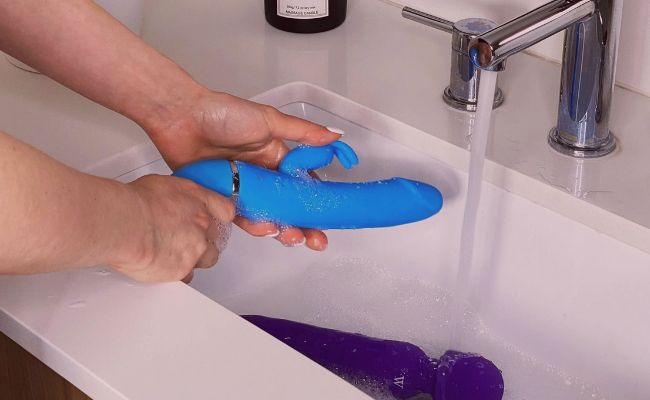
- Clean it according to its material and waterproof rating.
- Check the surface for damage.
- Keep compatible lubricant nearby.
- Agree where and how it may be used.
- Decide who will control it first.
- Choose a simple word or gesture that means pause.
- Make sure there is enough privacy and time.
Preparation does not need to make the experience clinical. It prevents a dead battery, confusing controls or missing lubricant from becoming the focus of a vulnerable first attempt.
Keep the First Experience Familiar
You do not need to redesign your entire sex life around the toy.
Include it alongside touch, kissing, conversation or other forms of intimacy you already enjoy. A familiar context can help both people notice the new sensation without feeling that they are performing a completely new role.
Begin at the lowest comfortable intensity and, where appropriate, explore over clothing or less sensitive external areas first. The receiver can place their hand over the giver’s hand to guide pressure and position.
Let the first experience be an experiment rather than an examination.
You do not need to use every setting. You do not need to reach orgasm. You do not need to use the toy for the entire encounter. Stopping after thirty seconds because the angle feels wrong is still useful information.
The most successful first experience is one in which both people remain able to communicate honestly, not necessarily one that produces the most intense physical response.
Avoid Turning the Toy Into a Performance Goal
It is easy to create a new kind of pressure around a product.
The person who suggested it may feel responsible for proving that it was a good idea. The other partner may feel responsible for reacting enthusiastically. If orgasm does not happen, both may worry that the experiment failed.
Pleasure is not always immediate. New sensations can require adjustment, and anticipation can make it difficult to relax. A toy may feel excellent in one position and distracting in another. It may suit solo use better than shared use, or one partner may enjoy giving with it more than receiving.
Try language that makes exploration easier:
- “You don’t need to react in any particular way.”
- “Tell me if you want more, less, a different spot or no toy.”
- “We can put it aside whenever we want.”
- “Let’s see what feels interesting rather than trying to make anything happen.”
Removing the demand for a result often creates more room for genuine pleasure.
Talk About Hygiene Before Sharing
When a toy moves between partners or body areas, cleaning and barrier decisions should be made before the moment becomes distracting.
Follow the product’s instructions and clean the toy before and after use. If a toy is shared, use a fresh appropriate barrier for each person and replace it when moving between anal and vaginal use. Clean the product between users and body areas as directed.
Porous or difficult-to-clean products are best kept for individual use. Even with a nonporous toy, many couples prefer one toy per person for simpler hygiene.
Keep charging ports, remotes and non-waterproof parts away from water. A product described as water-resistant should not automatically be treated as submersible.
Check In Afterwards
A short conversation after the experience helps separate physical preference from emotional guesswork.
Wait until both people feel settled, then ask:
- “What felt best?”
- “Was there anything you did not enjoy?”
- “Did you feel involved and able to guide me?”
- “Was the intensity comfortable?”
- “Would you want to try it again, change something or keep it for solo use?”
- “Is there anything you agreed to in the moment that you do not want next time?”
Allow neutral responses. Your partner does not have to love or hate the toy. “It was fine, but I prefer hands” is valid information.
Do not use feedback as evidence that someone was wrong to suggest the experiment. A toy that does not suit you can still lead to a clearer understanding of what does.
Common Mistakes When Introducing Sex Toys
Surprising your partner with a purchase
A gift can feel like pressure when the recipient never expressed interest. Discuss shared toys before buying them.
Raising the topic as criticism
Avoid presenting a toy immediately after dissatisfaction or comparing your partner with a previous experience.
Assuming enthusiasm equals unlimited consent
Excitement about one product does not imply consent to every setting, body area or form of control.
Choosing the most advanced option first
Extreme size, complex controls or intense stimulation can distract from learning what you both enjoy.
Making one partner responsible for all the research
If the experience is shared, the learning, cost, cleaning and storage should be discussed together.
Treating an orgasm as proof of success
Physical response does not automatically mean emotional comfort, and no orgasm does not mean the experience had no value.
Taking a preference personally
Your partner may enjoy a toy in a way that differs from what you expected, prefer using it alone or decide it is not for them. Preference is information, not a ranking of partners.
Ignoring aftercare and feedback
Connection after experimentation can matter as much as preparation. Check in, clean the toy and make room for honest reflection.
A Sex-Therapy Perspective: The Conversation Is Part of the Intimacy
Couples sometimes imagine that good sexual compatibility should be wordless. If two people truly understand each other, the belief goes, they should simply know what the other wants.
Real intimacy is less magical and more human.
Bodies change. Preferences evolve. Stress, medication, health, parenthood, ageing and relationship dynamics can all influence desire and response. What felt exciting last year may feel neutral now. Something that once seemed uninteresting may become appealing in a new context.
Talking about sex does not prove that a relationship lacks chemistry. It is one of the ways partners keep learning each other.
A sex toy can become part of that learning, but it is not a shortcut around communication. The most expensive product cannot create consent, repair resentment or guess what a partner needs. What it can do is offer another source of sensation and another opportunity to be curious together.
Approach the conversation with the same qualities you would want during intimacy: attentiveness, playfulness, honesty, patience and respect.
Frequently Asked Questions
How do I ask my partner to try a sex toy?
Choose a calm private moment outside sex. Share your interest using “I” language, such as “I’ve been curious about trying a small vibrator together,” then ask how the idea feels to them. Make it clear that discussion does not create any obligation to buy or use a toy.
Will suggesting a vibrator make my partner feel inadequate?
It might bring up insecurity, but thoughtful framing can help. Explain that the toy offers a particular sensation and is not a replacement for your partner or the intimacy you share. Listen if your partner feels worried rather than dismissing the concern.
What is a good first sex toy for couples?
A compact external vibrator is an approachable choice for many couples because it can be used without penetration and moved away immediately. The right first toy depends on your shared goal, boundaries and preferred sensation, not simply the “couples toy” label.
Should we choose the toy together?
Usually, yes. Browsing together allows both people to discuss shape, size, controls, intended use, budget and boundaries before a purchase creates pressure. Consider buying only from a shortlist that both partners genuinely like.
What if my partner says no to sex toys?
Respect the answer without trying to persuade them. You may ask whether the boundary applies to all toys, one type or shared use specifically, but do not search for a loophole. If the difference is important to your sexual wellbeing, discuss compatibility honestly while maintaining consent.
Is it okay to use my own sex toy in a relationship?
Solo pleasure can remain part of a healthy individual sexual life, but couples may have different expectations around privacy, sharing and masturbation. Discuss those expectations directly. A partner’s discomfort deserves conversation, but it does not automatically give them ownership over your body.
Can sex toys improve intimacy?
They can give couples another way to explore sensation, communicate and play, but they do not guarantee closeness. The quality of the conversation, consent and shared experience matters more than the object itself.
How do we avoid making the first time awkward?
Learn the controls beforehand, keep lubricant nearby, start gently and use the toy alongside familiar forms of intimacy. Treat it as an experiment rather than a performance and agree that either person can stop without explanation.
How should couples clean and share sex toys?
Follow the manufacturer’s material and waterproofing instructions. Clean before and after use, use a fresh suitable barrier for each person when sharing and change barriers when moving between anal and vaginal use. Keep porous products for individual use.
What if we buy a toy and one of us dislikes it?
Stop using it together. You can adjust the intensity, position or context, keep it for one person’s solo use or retire it. Money spent never creates an obligation to continue.
When should we speak to a sex therapist?
Consider professional support when conversations about sex repeatedly end in shame, pressure, conflict or withdrawal, or when differences in desire are causing ongoing distress. A qualified, consent-focused sex therapist can help you communicate; they should not pressure either partner into a sexual activity.
Final Thoughts
Introducing sex toys into a relationship begins with a conversation, not a purchase.
Choose a calm moment. Explain what interests you without criticising what you already share. Invite your partner’s real response, including uncertainty or a no. If you decide to explore together, choose a product around a shared goal and agree on control, body areas, intensity, hygiene and an easy way to stop.
Keep the first experience simple. Let familiar touch and connection remain part of the moment, and do not ask the toy to prove anything about your pleasure or your relationship.
The toy may become a favourite, a sometimes-option, a solo product or something you decide not to use again. Every outcome can be useful when both people feel heard and respected.
Explore couples toys, external vibrators and beginner-friendly pleasure products at Dear Desire, with plain, discreet delivery across South Africa.


Leave a comment
This site is protected by hCaptcha and the hCaptcha Privacy Policy and Terms of Service apply.