






Article: Body-Safe Sex Toy Materials: A South African Shopper’s Guide
Body-Safe Sex Toy Materials: A South African Shopper’s Guide
When you buy a sex toy, shape and sensation may be the exciting parts, but the material deserves just as much attention.
A toy’s material influences its feel, flexibility, lubricant compatibility, care and lifespan. It also determines what you should check before trusting a product with intimate areas of your body.
Unfortunately, product labels are not always as clear as shoppers need them to be. Words such as “premium”, “skin-like”, “body-safe” and “medical-grade” may sound reassuring, but they do not all identify a specific material or tell you how a product was tested. A transparent listing should name the material, explain how to care for it and provide appropriate warnings.
This guide compares common materials without panic or jargon. It explains porosity, silicone and TPE, glass and metal, label checks and lubricant compatibility. No material is perfect for everyone; the right choice fits your body, preferred play and realistic care routine.
What Does “Body-Safe” Actually Mean?
“Body-safe” is commonly used to describe a product considered suitable for contact with the body. On its own, however, it is a broad marketing phrase, not the name of a material.
A responsible buying decision should go beyond that phrase. Look for answers to practical questions:
- What is the part that touches the body actually made from?
- Is the material named clearly rather than described only as “soft-touch” or “skin-like”?
- Is the surface smooth, intact and designed for intimate use?
- Does the manufacturer provide cleaning, storage and lubricant instructions?
- Are any coatings, metallic finishes or soft-touch layers identified?
- Does the design suit the way the toy will be used?
- Is the seller able to provide useful product information?
Material is only one part of safety. A well-made toy also needs an appropriate shape, secure construction, smooth seams and clear instructions. Anything intended for anal insertion must have a genuinely flared base, stopper or retrieval design.
International Standard ISO 3533:2021 covers design, materials, biocompatibility, cleaning information and other safety considerations for manufactured sex toys that contact the genitals or anus. It is aimed primarily at manufacturers. Seeing a specific claim of conformity can be useful, but do not assume that every product automatically meets the standard simply because it is sold as a sex toy.
In short, “body-safe” should begin a conversation, not end it. The more specific and verifiable the information, the more confidently you can shop.
The Big Question: Is the Material Porous or Non-Porous?
You will often see sex toy materials divided into two groups: porous and non-porous. This distinction is useful, but real products can be more complicated than a simple chart suggests.
Non-porous materials
A non-porous surface does not readily absorb moisture into open pores. Common examples used for sex toys include:
- 100% silicone from a transparent, reputable manufacturer
- Smooth hard plastic such as ABS
- Borosilicate glass designed for sexual use
- Stainless steel made and finished for intimate use
These materials are generally easier to clean thoroughly because fluids remain on the surface. That does not make a toy self-cleaning or indestructible. Textured areas, joins, charging ports and moving components can still collect residue, while scratches, chips or peeling coatings can make a once-smooth surface unsuitable for continued use.
Porous and semi-porous materials
Soft realistic-feel products may use TPE, TPR, PVC, rubber-like compounds or proprietary elastomer blends. These categories contain many different formulations, so quality and care requirements can vary.
They may offer exceptional softness, stretch or tissue-like texture, particularly in masturbation sleeves. The trade-off is that they can be more difficult to clean and dry completely, may retain odour or colour over time and usually have a shorter practical lifespan than a durable non-porous toy.
Porous does not automatically mean that a product will harm you on contact. It means you should understand the limits of the material, follow the manufacturer’s care instructions carefully, avoid casual sharing and replace it when the surface changes.
If a listing uses only a vague term such as “real feel” without naming the material underneath, ask before buying.
Sex Toy Materials at a Glance
| Material | Typical feel | Main advantages | Important considerations |
|---|---|---|---|
| Silicone | Soft to firm, flexible, often velvety | Comfortable, durable and generally easy to clean | Confirm the material claim; follow the maker’s lube and cleaning advice |
| ABS plastic | Hard, light and smooth | Transfers vibration well, easy to handle and often affordable | Check for intact seams or coatings; do not boil electronic toys |
| Borosilicate glass | Very firm, smooth and weighty | Precise pressure, easy surface cleaning and temperature-responsive | Use purpose-made glass toys; inspect for chips or cracks |
| Stainless steel | Very firm, heavy and smooth | Durable, weighty and temperature-responsive | Weight and firmness may feel intense; verify the metal and finish |
| Aluminium | Firm but lighter than steel | Smooth sensation without as much weight | Anodised or coated surfaces must remain intact |
| TPE or TPR | Soft, stretchy and realistic | Tissue-like feel and detailed textures | More demanding care, thorough drying and earlier replacement |
| Jelly, PVC or unspecified rubber | Soft and flexible | Often inexpensive | Composition may be unclear; odour, tackiness or surface changes are warning signs |
This is a shopping overview, not permission to ignore the product instructions. Construction matters as much as the base material. A silicone-covered vibrator still contains a motor and charging components; a metal toy may include a bonded jewel or coating; a sleeve may combine a soft insert with a hard outer case. Always care for the complete product you own.
Silicone Sex Toys: Popular for Good Reason
Quality silicone is generally valued because its intact surface is non-porous, it does not require plasticisers to make it flexible and it can be cleaned more easily than many realistic-feel elastomers. It is used across vibrators, dildos, plugs, rings, beads and wearable toys.
Not every silicone label tells the same story
“Silicone” describes a family of materials. Terms such as “100% silicone”, “platinum-cured silicone” and “medical-grade silicone” are more specific than “silicone-like”, “silicone feel” or “soft-touch”. Even so, shoppers usually cannot confirm a formulation by sight or touch alone.
Do not rely on viral home tests such as burning, stretching or pinching. They are unreliable and may damage the toy. Better signs are transparent labelling, a known manufacturer and sensible care instructions.
What silicone feels like
Silicone can range from plush and flexible to dense and firm. A matte finish may create more drag than polished glass or metal, so lubricant can make a major difference to comfort. Flexibility is helpful for people who prefer some give; firmness is useful when targeted pressure matters.
Silicone and lubricant
Water-based lubricant is the simplest default because it is generally compatible with silicone toys and other common materials.
Silicone-based lubricant may interact with the surface of some silicone toys. Formulations differ, so the safest approach is to check both manufacturers’ instructions. If the toy maker permits silicone lubricant, patch-test a small, inconspicuous area first and stop if the surface becomes tacky, swollen or altered.
Do not assume the word “silicone” on two products means they will be compatible.
Caring for silicone
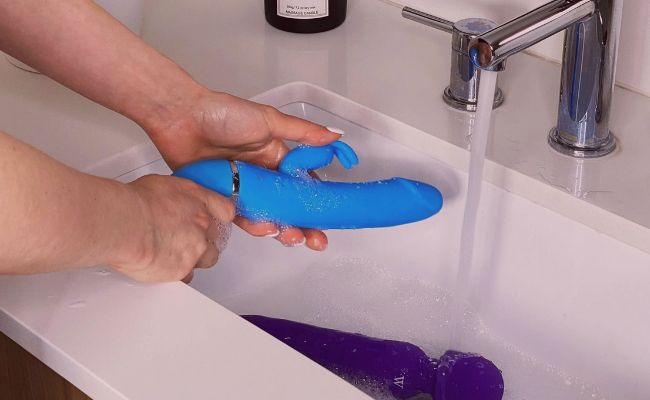
Wash according to the toy’s instructions, usually with warm water and mild, fragrance-free soap or a suitable toy cleaner. Rinse away all residue and dry completely before storage.
Some solid, non-motorised silicone items may tolerate higher-temperature cleaning, but never boil a product merely because its outer layer is silicone. Motors, batteries, adhesives, coatings and internal structures may be damaged. The manufacturer’s directions take priority.
ABS Plastic: Hard, Light and Excellent for Vibration
ABS is a hard plastic commonly used in bullet vibrators, control handles, internal shells and other rigid components. Its smooth, intact surface is non-porous, and its light weight makes it easy to hold.
Because hard plastic does not absorb much of a motor’s movement, it can transfer vibration efficiently. This is one reason a compact plastic bullet may feel surprisingly direct even when it is smaller or less expensive than a silicone-covered toy.
ABS suits shoppers who want firm, precise sensation in a lightweight toy and can provide an accessible entry point when it comes from a reputable brand.
The material name does not override build quality. Inspect the toy for rough joins, cracks, loosened caps or peeling soft-touch coatings. If the surface becomes damaged, it can be harder to clean and may feel uncomfortable.
Many ABS products contain electronics and should not be submerged unless they carry a suitable waterproof rating. Wipe or wash them exactly as directed, keeping water away from unsealed charging ports and battery compartments.
Glass Sex Toys: Smoothness, Firmness and Precision
Purpose-made glass toys offer a completely different sensation from flexible silicone. They are rigid, smooth and often weightier than they look. This allows precise pressure with very little surface drag.
Borosilicate glass is frequently chosen for quality glass toys because it is resistant to thermal stress and can be formed with a smooth, non-porous surface. The crucial phrase is purpose-made. A household glass object is not a safe substitute for a sex toy. It may have weak points, unsafe edges, an unsuitable shape or no reliable retrieval design.
Why people choose glass
The polished surface can feel exceptionally smooth, firmness makes targeted pressure easier and the material responds to gentle temperature changes. It is compatible with water- and silicone-based lubricant, subject to any barrier being used.
Glass can feel intense because it has no give. Beginners may prefer a slimmer design and a slow approach rather than assuming a smaller-looking toy will feel gentle.
Glass safety checks
Inspect a glass toy in good light before every use. Retire it if you see or feel a chip, crack, sharp point or damaged decorative element. Avoid dropping it onto tiles or other hard surfaces.
For temperature play, use comfortably warm or cool water and test the surface against the inside of your wrist. Do not move glass abruptly between extreme temperatures, use boiling water without explicit manufacturer approval or place it in a freezer. Delicate genital tissue can be injured by temperatures that seem exciting in theory.
Dear Desire’s glass dildo collection is a useful place to compare this smooth, rigid style with softer options.
Stainless Steel and Other Metal Toys
Metal toys are loved for their weight, firmness, smooth glide and ability to hold a gentle temperature change. They can provide pressure without requiring a large size, which makes dimensions and weight equally important when shopping.
Stainless steel is a common premium choice when the alloy and finish are clearly identified. A high-quality surface should be smooth, stable and free from sharp seams. Metal is non-porous, but that description applies to the intact material, not automatically to glued jewels, decorative coatings or gaps between components.
Aluminium is much lighter than stainless steel. It is often anodised or coated to create a smooth protective surface. If that finish chips, scratches deeply or begins to peel, stop using the product.
Metal is not automatically beginner-friendly
Rigid weight can feel more intense than a flexible toy of similar dimensions. Start with a manageable size, use plenty of lubricant and keep a secure hold. Do not drop a heavy toy onto the body or leave it where it can roll from a bed or surface.
Temperature play should remain mild. Warm or cool the toy with water, test it carefully and avoid extreme heat or cold. Never heat a toy in a microwave, oven or on a stove.
The Dear Desire anal-toy collection includes silicone, glass and metal options, allowing shoppers to compare flexibility, firmness and weight. Whatever the material, choose only a design with a wide, secure anal-safe base.
TPE and TPR: Soft, Stretchy and More Care-Intensive
Thermoplastic elastomer (TPE) and thermoplastic rubber (TPR) are broad categories used for soft, stretchy toys. They are especially common in realistic masturbation sleeves because they can mimic the give and texture of body tissue more closely than firm plastic or glass.
That realistic feel is a genuine benefit, not something to dismiss. The important point is that material choice creates a different care routine.
TPE and TPR formulations vary between manufacturers. They are commonly treated as porous or semi-porous for practical hygiene decisions because they may retain moisture and are harder to sanitise fully. They can also be sensitive to heat, oils, harsh cleaners and contact with other materials.
How to care for a soft sleeve
Follow the product-specific instructions. A sensible routine usually includes:
- Remove the sleeve if the design allows it.
- Rinse and wash it promptly after use with the recommended cleaner or mild soap.
- Clean textured channels gently; do not turn the sleeve inside out unless instructed.
- Rinse thoroughly and dry the inside and outside completely before storage.
- Use only a renewal powder recommended by the manufacturer, if required.
- Keep it away from heat, direct sunlight and incompatible toys.
Use water-based lubricant unless the manufacturer clearly approves something else. Oils and silicone-based products may swell, soften or degrade some elastomer formulations.
Explore Dear Desire’s male masturbator collection by comparing not only texture and stimulation but also whether the sleeve is removable, how it dries and what care products it requires.
When should a TPE or TPR toy be replaced?
There is no universal replacement date because formulations, use and care differ. Check the toy each time. Replace it when you notice persistent odour after cleaning, tears, cracks, sticky or oily changes, discolouration that does not wash away, mould, deformation or a surface that can no longer be cleaned confidently.
Because these materials are more difficult to sanitise, avoid sharing them. If a toy will be shared, a new condom for each person and each body opening adds a barrier, but the product still needs to be cleaned and dried as directed.
Jelly, PVC, Rubber and Unspecified “Real Feel” Blends
Words such as jelly, rubber, cyberskin and real feel may describe texture more than chemistry. Some products provide a full material breakdown; others do not.
The problem with an unspecified blend is uncertainty. You may not know whether it contains PVC, an elastomer, latex, plasticisers, a surface oil or another additive. You also may not know which cleaner or lubricant the material can tolerate.
Research into sex-toy materials remains limited. A small 2023 exploratory study raised questions about material breakdown and additives in four products, but did not represent the entire category or simulate exact use. The practical takeaway is that disclosure, quality control and surface condition matter.
If you are considering an inexpensive or unfamiliar product, ask:
- Is the actual material named?
- Is it explicitly phthalate-free, and is the manufacturer reputable enough for that claim to be meaningful?
- Is there a strong chemical smell that persists after airing and washing?
- Does the surface feel oily, powdery or unusually sticky?
- Are compatible lubricants and cleaning methods stated?
- Can the retailer identify the brand and manufacturer?
If the answer to most of these questions is no, choose a more transparent option. A lower price is not a bargain if the toy quickly becomes unpleasant or impossible to care for.
Coatings, Paint, Glitter and Decorative Finishes
A toy may be made from more than one material. A plastic vibrator might have a rubberised coating; a metal plug might include a glued jewel; a glass toy might contain decorative colour; a silicone toy might have a contrasting plastic control panel.
Evaluate the surface that actually touches your body.
Look for smooth joins, secure decorative components and no bubbling, peeling, exposed adhesive, sharp seams or cracks near flexible joints.
Stop using a toy if a coating starts to lift or a decorative part loosens. Do not attempt to repair an insertable toy with household glue, tape or nail polish. These products were not formulated for intimate contact, and a repair can create rough edges or trap moisture.
“Medical-Grade”, “Food-Grade” and “Phthalate-Free” Explained
Labels can help, but only when you understand what they do and do not tell you.
Medical-grade
This should refer to defined requirements for medical applications or biocompatibility. It is more meaningful when the manufacturer names the material and relevant testing. It does not compensate for poor design or unclear instructions.
Food-grade
Food-contact and intimate-contact suitability are not identical. “Food-grade” does not prove that the finished toy was designed or tested for genital or anal use.
Phthalate-free
Phthalates are plasticisers used in some flexible plastics. A phthalate-free statement is useful, particularly for soft PVC-style products, but addresses only one substance group. It does not confirm porosity, construction or lubricant compatibility.
Hypoallergenic
No material can promise that every person will avoid irritation. A reaction may involve the toy, lubricant, cleaner, latex or residue. Stop for burning, swelling, rash, unusual discharge or persistent discomfort, and seek medical advice if symptoms are significant or do not settle.
Choosing a Material by the Sensation You Want
Safety matters, but pleasure matters too. The best material is one that is transparent, well made, appropriate for the activity and enjoyable for your body.
If you prefer softness and flexibility
Quality silicone offers comfortable give without the higher-maintenance routine of many realistic-feel materials. For a tissue-like sleeve, TPE or TPR may suit you better, provided you can wash and dry it carefully and replace it when needed.
If you enjoy firmness or weight
Glass, stainless steel and hard ABS offer direct sensation. Rigid toys do not compress, so check their dimensions carefully. Stainless steel adds substantial weight; compare the listed weight as well as size.
If you want strong vibration or easy care
Hard ABS and firmer silicone may transfer vibration more directly than a plush outer layer, although the motor matters too. For simple care, choose a smooth, non-porous design with few seams or inaccessible gaps.
How Material Changes Lubricant Compatibility
The wrong lubricant can damage a toy, weaken a condom or irritate sensitive skin. Check all three elements: your body, the toy material and any barrier you are using.
Water-based lubricant
Water-based lubricant is the most broadly compatible starting point. It generally works with silicone, hard plastic, glass, metal and soft elastomer toys, as well as latex condoms. It may need to be reapplied during longer sessions.
Silicone-based lubricant
Silicone lubricant lasts longer and is useful in water because it does not rinse away quickly. It is generally compatible with glass and uncoated stainless steel. It may affect some silicone, TPE, TPR or coated toys, so check the toy and lubricant instructions before combining them.
Oil-based products
Oil can damage latex condoms and may interact with soft toy materials. Oils can also be difficult to wash from toys and skin. Do not improvise with household oils simply because they feel slippery.


Leave a comment
This site is protected by hCaptcha and the hCaptcha Privacy Policy and Terms of Service apply.