






Article: Can You Use Sex Toys During Pregnancy? A Safety-First Guide
Can You Use Sex Toys During Pregnancy? A Safety-First Guide
Pregnancy can change almost every part of how you experience your body, including desire, sensitivity, comfort and the way you want to be touched. You may feel more interested in pleasure than usual, less interested, or differently interested from one week to the next. All of those responses can be normal.
It is also normal to wonder whether a vibrator, dildo or another pleasure product is still safe to use while you are pregnant.
For most people with a healthy, uncomplicated pregnancy, sexual activity—including masturbation and the use of external or insertable sex toys—is generally considered safe. A toy placed in the vagina cannot reach the baby. The pregnancy is protected inside the uterus, behind the cervix, by the amniotic sac and the strong muscles of the uterus.
That reassuring answer comes with an important qualification: every pregnancy is different. Certain complications, symptoms or medical instructions may mean that vaginal penetration, orgasm or sexual activity should be limited for a time. If your doctor or midwife has advised pelvic rest, if you have experienced bleeding or leaking fluid, or if you are uncertain about your individual pregnancy, ask for personalised guidance before using a toy.
This guide explains the practical side of using sex toys during pregnancy—from choosing a comfortable toy and adjusting your usual routine to hygiene, lubricant, warning signs and the questions worth asking your maternity-care provider.
The Short Answer: Are Sex Toys Safe During Pregnancy?
Sex toys are usually safe during a low-risk pregnancy when they are used gently, hygienically and according to their instructions.
That includes:
- External vibrators used on the vulva or other comfortable external areas
- Insertable vibrators and dildos used vaginally
- Solo masturbation
- Consensual toy use with a partner
- Orgasm, unless a healthcare professional has specifically advised you to avoid it
You may need to avoid or modify sexual activity if you have a pregnancy complication, concerning symptom or personalised restriction from your healthcare professional. The phrase “sex is safe during pregnancy” is broad guidance for uncomplicated pregnancies, not a substitute for advice based on your medical history.
If you have been told to avoid sex, do not assume that a vibrator is automatically an acceptable alternative. Ask what the instruction means for you. A restriction may apply only to vaginal penetration, or it may include orgasm and other forms of sexual stimulation.
Why a Sex Toy Cannot Touch the Baby
One of the most common worries is that an insertable toy could reach or injure the baby.
The vagina and uterus are separate spaces. The cervix sits at the top of the vaginal canal and forms the entrance to the uterus. During pregnancy, the baby develops within the uterus, surrounded by the amniotic sac and fluid. A vaginal toy does not travel through the closed cervix into the uterus.
This does not mean that every kind of penetration will feel comfortable. Pregnancy can make the cervix and vaginal tissues more sensitive, and a rigid toy can create more concentrated pressure than a body part. Deep, forceful or uncomfortable thrusting is unnecessary. Use a depth, angle and pace that feel good in your changing body, and stop if anything hurts.
External stimulation is a completely valid option if penetration feels uncomfortable or simply does not appeal to you.
Pregnancy Can Change Desire and Sensation
There is no standard pregnancy libido.
Hormonal changes, increased blood flow, fatigue, nausea, breast tenderness, stress and changes in body image can all affect desire. Some people notice more genital sensitivity or more intense orgasms. Others feel less responsive, become uncomfortable more quickly or have little interest in sexual touch.
Your experience may also change across the pregnancy:
- In the first trimester, nausea, exhaustion and uncertainty may make pleasure feel unimportant—or solo touch may be an easy, low-pressure way to relax.
- In the second trimester, some people have more energy and increased sensitivity, while others notice little change.
- In the third trimester, a growing abdomen, pelvic pressure and reduced mobility may make familiar positions awkward even when desire remains.
None of these patterns is a requirement. You do not need to maintain a certain level of sexual activity to prove that your relationship is healthy. You also do not need to suppress desire simply because you are pregnant.
The most useful approach is to treat every experience as new information. Begin gently, notice how your body responds today and give yourself permission to stop or change direction without disappointment.
When to Ask Before Using a Sex Toy
Contact your doctor, midwife or maternity unit before sexual activity if you have symptoms or complications that may affect what is safe for you. These can include:
- Unexplained vaginal bleeding
- Leaking amniotic fluid or suspected broken waters
- Placenta previa or another placental concern
- A cervix that is opening too early or another cervical complication
- A history or current risk of preterm labour
- Painful or regular contractions
- A multiple pregnancy with specific complications
- A current genital or urinary infection
- Any instruction to avoid sex, penetration, orgasm or strenuous activity
This list is not exhaustive. Your maternity-care provider may recommend restrictions for reasons specific to your pregnancy.
If you are told to go on “pelvic rest,” ask exactly what that means. The term is used differently in different situations. Useful questions include:
- Should I avoid vaginal penetration?
- Does that include fingers and sex toys?
- Should I avoid orgasm as well?
- Is external stimulation without orgasm acceptable?
- How long does the restriction apply?
- Which symptoms should make me contact you urgently?
These are ordinary healthcare questions. Clear instructions are safer than trying to interpret a broad phrase on your own.
External Vibrators During Pregnancy
An external vibrator may be a comfortable choice because it does not require vaginal penetration. Bullets, palm vibrators, small wands and clitoral stimulators can all be used externally, provided the shape and intensity feel comfortable.
Pregnancy can increase genital blood flow and sensitivity. A setting that felt gentle before pregnancy may feel much stronger now. Start at the lowest intensity, use light pressure and build only if you want more.
Try placing the toy:
- Over underwear for a softer sensation
- On the outer vulva rather than directly on the most sensitive point
- Beside the clitoris or over the clitoral hood
- Against the inner thighs or other external erogenous areas
- In a position that does not place pressure on your abdomen
A broad-contact vibrator may feel more comfortable than a very pointed one if concentrated stimulation feels overwhelming. A compact toy may be easier to position around a changing belly.
Stop if stimulation causes pain, burning, unpleasant cramping or numbness that concerns you. More intensity is not necessarily more satisfying, especially when your sensitivity is changing.
If external stimulation suits you, explore Dear Desire’s clitoral vibrators by shape, intensity range and ease of control rather than searching for the most powerful option.
Insertable Vibrators and Dildos During Pregnancy
Vaginal toys can generally be used during an uncomplicated pregnancy unless your healthcare professional has advised otherwise.
Comfort should guide the experience. Pregnancy may make deep penetration less appealing, particularly as the cervix becomes more sensitive or pelvic pressure increases. A familiar toy may suddenly feel too long, too rigid or too filling. That does not mean anything is wrong; it may simply no longer suit your body at this stage.
For more comfortable use:
- Choose a smooth toy without cracks, rough seams or sharp edges.
- Begin with a modest insertable size and a shape you can control easily.
- Apply compatible lubricant to reduce friction.
- Insert slowly and keep the depth shallow at first.
- Avoid forceful, rapid or very deep thrusting.
- Change the angle or stop if you feel cervical, pelvic or abdominal discomfort.
- Never use pain as a sign that you need to “relax into it.”
A flared base is essential for anything used anally, but it is not a licence to move a toy directly from the anus to the vagina. Wash the toy thoroughly and use a new barrier before changing body areas.
What About Air-Pulse and Suction-Style Toys?
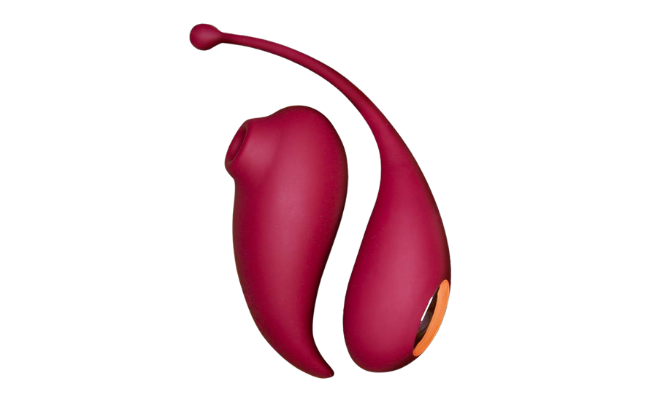
Air-pulse toys are designed to stimulate the external clitoral area using changing air pressure around an opening. They are not intended to create strong suction throughout the body, and they do not reach the uterus or baby.
As with traditional vibration, begin on a low setting because pregnancy may change sensitivity. Make sure the nozzle rests comfortably against external tissue and stop if you experience pinching, pain or irritation.
Do not confuse a purpose-designed clitoral air-pulse toy with blowing air into the vagina. No person or device should blow air into the vagina during pregnancy. Use every product only on the body area and in the manner described by its manufacturer.
Can Orgasm Cause Labour or Miscarriage?
Orgasm can cause the uterus to tighten temporarily. These mild cramps or tightenings are usually not a concern in an uncomplicated pregnancy and do not mean that labour has started.
Sex and orgasm do not cause miscarriage in a healthy pregnancy. Most miscarriages occur because the pregnancy is not developing as expected, not because of sexual activity.
However, the advice can be different when there is a risk of preterm labour, bleeding, placenta previa, cervical complications or another medical concern. If your healthcare professional has advised you to avoid orgasm, follow that individual guidance even if the stimulation is entirely external.
Severe pain, persistent cramping, regular contractions, heavy bleeding or leaking fluid should not be dismissed as a normal response to orgasm. Contact your maternity-care provider or maternity unit for advice.
Light Spotting or Cramping After Penetration
The cervix can bleed more easily during pregnancy because it has an increased blood supply. Some people notice mild spotting after vaginal sex or penetration. Temporary cramping can also occur after penetration or orgasm.
It is still important to tell your maternity-care provider about bleeding during pregnancy so that they can advise you appropriately. Seek prompt care for heavy bleeding, severe or persistent pain, leaking fluid, dizziness, fever, regular contractions or any symptom your care team has told you to treat as urgent.
If a toy repeatedly causes spotting or discomfort, stop using it and ask for guidance before trying again. Switching to gentler external stimulation may feel better, but it does not replace a medical assessment when symptoms are concerning.
Choose a Toy for Control, Not Maximum Power
Pregnancy is not the moment to pressure yourself into tolerating a toy because it used to be a favourite or because reviews describe it as powerful.
Useful features may include:
- A low starting intensity
- Gradual, easy-to-adjust controls
- A compact shape that is comfortable to reach
- A handle that does not require awkward wrist positions
- A smooth, intact surface
- Clear material and care information
- A travel lock that prevents accidental activation in storage
- A waterproof rating suitable for your intended use and cleaning method
For insertable toys, controllable depth and a comfortable shape matter more than size. For external toys, consider whether you prefer precise contact or a broader sensation.
If fatigue, pelvic discomfort or limited reach makes holding a toy difficult, a small bullet vibrator may be easier to manoeuvre than a long, heavy model. A partner can also hold the toy, but the pregnant person should remain in control of intensity, placement and the decision to stop.
Materials and Surface Condition Matter
Choose a product from a reputable manufacturer that clearly identifies its material and provides use and cleaning instructions.
Non-porous materials such as silicone, ABS plastic, stainless steel and borosilicate glass are generally easier to clean thoroughly than porous soft materials. Material quality is only one part of safety, however. Construction, design, electrical integrity and using the product as intended also matter.
Inspect a toy before every use. Do not use it if you notice:
- Cracks, tears or peeling
- A rough or sticky surface that was not present before
- Sharp seams or damaged edges
- Rust, corrosion or discolouration that concerns you
- A loose battery compartment
- Exposed electrical components
- Unusual overheating or a damaged charging cable
Do not improvise with household objects. A purpose-designed pleasure product has a shape, surface and retrieval method intended for intimate use; a household object may break, cause injury or become difficult to remove.
Hygiene Is Especially Important
Pregnancy does not make every infection inevitable, but preventing the transfer of bacteria and sexually transmitted infections remains important for your health and the pregnancy.
Clean a toy before and after every use according to the manufacturer’s instructions. Waterproof and water-resistant are not the same thing, so do not submerge a product unless its stated rating permits it.
A practical routine is:
- Wash your hands.
- Inspect the toy for damage.
- Clean it using the method approved by the manufacturer.
- Rinse away all cleaning residue when applicable.
- Dry it completely with a clean, lint-free cloth or allow it to air-dry.
- Store it separately in a clean, dry pouch or container.
Do not assume that boiling, dishwashing or strong disinfectants are safe for every toy. Heat can damage motors, batteries, adhesives and certain materials. Harsh or fragranced products may leave residue that irritates sensitive tissue.
If a toy is shared, use a new condom or suitable barrier for each person and each body area, and clean the toy between uses. A barrier reduces exposure but does not make damaged or difficult-to-clean toys safe.
Never Move a Toy from Anal to Vaginal Use Without Cleaning It
Bacteria that normally live in the bowel can cause problems when transferred to the vagina or urinary tract.
Do not move a toy, finger or penis directly from anal contact to vaginal contact. Wash it thoroughly first and use a new condom or barrier. The same rule applies outside pregnancy, but it deserves particular attention when you are trying to reduce avoidable infection risks.
Pregnancy can also bring haemorrhoids, constipation and increased pelvic pressure. Anal play may feel less comfortable than usual. Use a toy with a wide, secure flared base, plenty of compatible lubricant and no force. Stop for pain or bleeding and seek medical advice when needed.
Sexually Transmitted Infections Still Matter During Pregnancy
Pregnancy does not protect you from sexually transmitted infections. Some STIs can affect both the pregnant person and the baby, and many have no obvious symptoms.
If you or a partner has other partners, if you are with a new partner, or if either person’s status is uncertain, discuss testing and barrier use with your healthcare professional. Do not share a toy that has contacted bodily fluids without cleaning it and changing the barrier.
If a partner has a known or suspected STI, pause sexual contact and follow professional advice about testing, treatment and when it is safe to resume. A condom on a toy does not address every form of skin-to-skin transmission.
Choosing and Using Lubricant
Pregnancy can change natural lubrication in either direction. Even when arousal feels strong, a compatible lubricant can reduce friction and make external or internal toy use more comfortable.
Water-based lubricant is a practical choice for most toys and condoms. Check both the toy manufacturer’s care instructions and the lubricant label before combining products. Silicone lubricant may not be compatible with some silicone toys, while oil-based products can damage latex condoms.
Choose a simple lubricant that feels comfortable on your skin. Avoid assuming that “warming,” “cooling,” tingling or heavily fragranced products will feel the same during pregnancy; increased sensitivity can make added sensations irritating.
Stop using any product that causes burning, itching, swelling or ongoing discomfort. If you have recurrent irritation, unusual discharge, odour, pain when urinating or another possible infection symptom, speak to your healthcare professional rather than masking the discomfort with more lubricant.
You can compare toy-friendly options in Dear Desire’s water-based lubricant collection, while still checking the individual product label for ingredients and compatibility.
A Gentle Step-by-Step Routine
If your pregnancy is uncomplicated and you have not been advised to restrict sexual activity, this simple routine can help you explore without rushing.
1. Check how you feel today
Notice nausea, fatigue, pelvic pressure, cramps, bleeding, unusual discharge or leaking fluid. Pleasure can wait if something feels medically concerning.
2. Choose a supported position
Use pillows to support your hips, back or side. Avoid any position that makes you dizzy, breathless, uncomfortable or places unwanted pressure on your abdomen. As pregnancy progresses, side-lying or semi-reclined positions may feel more comfortable than lying flat.
3. Clean and inspect the toy
Make sure it is intact, charged or fitted with safe batteries, and suitable for the way you plan to use it.
4. Add lubricant if helpful
Apply a small amount and add more as needed. Friction is not a test of arousal.
5. Begin externally
Starting on the thighs, outer vulva or over underwear gives you time to assess sensitivity before using direct stimulation or penetration.
6. Keep the intensity low
Increase gradually only if that feels good. Change placement or pressure before assuming you need more power.
7. Let comfort determine depth
If using an insertable toy, move slowly and remain shallow until your body feels comfortable. There is no benefit to reaching the cervix or using the toy’s full length.
8. Pause when your body asks
Stop for pain, bleeding, leaking fluid, unpleasant cramping, dizziness, shortness of breath, numbness or a feeling that something is not right.
9. Clean up and check in
Clean the toy, urinate if that is part of your usual comfort routine, drink water and notice how your body feels after the experience. Contact your care team if symptoms concern you.
Comfortable Positions as Your Body Changes
The best position is one that allows easy breathing, avoids painful pressure and gives the pregnant person control.
Options that some people find comfortable include:
- Side-lying with pillows between or beneath the knees
- Semi-reclined with the upper body supported
- Seated with the back supported
- On hands and knees if that feels stable and comfortable
- The pregnant partner on top or otherwise controlling depth during partnered penetration
There is no need to preserve a pre-pregnancy routine. A position that works one month may feel awkward the next. Move slowly when changing position, especially if you feel light-headed or your joints feel less stable.
A toy can also be used without genital stimulation. A vibrator designed for appropriate external use may feel pleasant on the shoulders, thighs or other areas, provided you avoid painful pressure and follow the manufacturer’s instructions.
Communication with a Partner
Pregnancy can create mismatched expectations. One person may be eager for closeness while the other feels tired, physically unfamiliar or anxious about harming the baby.
Begin with reassurance that intimacy is not a performance and penetration is not the goal. Try asking:
- Would touch feel good today, or would you prefer another kind of closeness?
- Do you want to control the toy, or would you like me to hold it?
- Where does pressure feel comfortable right now?
- Would you like to stop at any point without needing to explain?
- Are we avoiding penetration, orgasm or any specific area today?
If a partner controls the toy, agree that the pregnant person’s request to slow down, change position or stop is immediate and final. Consent remains active throughout the experience.
Affection without sexual touch can be equally valuable. Cuddling, massage, conversation, bathing together or resting close to one another can maintain connection when sexual activity is unwanted or medically restricted.
When to Stop and Seek Advice
Stop using the toy and contact your healthcare professional or maternity unit if you experience:
- Heavy bleeding
- Severe or persistent abdominal or pelvic pain
- Regular or painful contractions
- Leaking fluid or suspected broken waters
- Fever or feeling acutely unwell
- Dizziness or fainting
- Unusual discharge with pain, irritation or odour
- A noticeable change in your baby’s movement after the stage when you have been advised to monitor it
- Any symptom your maternity team has told you to report urgently
For mild spotting or temporary cramping, follow the advice your maternity team has given you. When in doubt, call. Pregnancy care professionals would rather answer a question than have you sit with uncertainty.
Frequently Asked Questions About Sex Toys During Pregnancy
Can a vibrator hurt the baby?
In an uncomplicated pregnancy, an external or vaginal vibrator cannot touch the baby. The baby is protected inside the uterus, behind the cervix. Use the toy gently and follow any restrictions from your healthcare professional.
Can I use a vibrator in the first trimester?
Sexual activity and vibrator use are generally safe throughout a healthy pregnancy. A vibrator does not cause miscarriage. Ask for personalised advice if you have bleeding, pain, a history that places your pregnancy at higher risk or any restriction from your care team.
Can I use a vibrator in the third trimester?
It is usually acceptable in an uncomplicated pregnancy, but comfort and mobility may change. Use supported positions, avoid unwanted abdominal pressure and stop for concerning symptoms. Do not have penetrative sex or insert toys if your waters have broken.
Can orgasm bring on early labour?
Orgasm may cause brief uterine tightening, but it does not normally trigger preterm labour in an uncomplicated pregnancy. People at risk of preterm labour or with certain complications may receive different advice and should follow it.
Is an external vibrator safer than an internal toy?
External use avoids vaginal penetration and may feel more comfortable, but it is not automatically suitable for every restriction. If you have been told to avoid orgasm or all sexual activity, external stimulation may also be included. Ask what your restriction covers.
How deep can an insertable toy go?
There is no target depth. Use only as much of the toy as feels comfortable, and avoid deep, forceful contact. Pregnancy can make the cervix more sensitive. A toy cannot pass through the closed cervix to the baby.
Can I use a wand vibrator while pregnant?
A wand can generally be used externally during a healthy pregnancy. Its broad vibration may feel comfortable, but full-size wands can be powerful and heavy. Start low, use light pressure and choose a position that does not strain your wrist or place pressure on your abdomen.
Are rechargeable toys safe during pregnancy?
The power source does not change the general pregnancy guidance. Use a reputable, undamaged product; keep charging components dry; never use a toy while it is charging unless the manufacturer explicitly designed it for that purpose; and stop if it overheats or behaves unusually.
Should I use a condom on a sex toy?
A condom or suitable barrier can reduce fluid transfer when a toy is shared or moved between users, but use a new barrier for each person and body area. Clean the toy as directed as well. Confirm that the condom, toy material and lubricant are compatible.
Can I use an anal toy while pregnant?
Some people can, but pregnancy-related haemorrhoids, constipation or pelvic pressure may make anal play uncomfortable. Use only a purpose-designed toy with a wide flared base, plenty of lubricant and no force. Never move it from the anus to the vagina without cleaning it and changing the barrier.
What if I spot after using a toy?
The cervix can bleed more easily during pregnancy, and light spotting can occur after penetration. Tell your maternity-care provider about bleeding so they can advise you. Seek prompt care for heavy bleeding, severe or persistent pain, contractions, dizziness or leaking fluid.
What does pelvic rest mean for sex toys?
It depends on why it was recommended. It may mean no vaginal penetration, or it may include orgasm and other stimulation. Ask your healthcare professional for precise instructions rather than assuming an external toy is allowed.
Can I use the same toy before and after pregnancy?
Yes, if it remains intact, hygienic and comfortable. Your preferences may change during pregnancy and again after birth. Do not resume insertable use after delivery until your healthcare professional confirms that healing and your individual circumstances make it appropriate.
What if I do not want sexual touch during pregnancy?
That is completely valid. Desire can rise, fall or disappear during pregnancy. You never owe a partner sexual activity, and there are many non-sexual ways to share closeness and affection.
Pleasure During Pregnancy Should Feel Like a Choice
Pregnancy does not remove your sexuality, and it does not create an obligation to remain sexually active. Pleasure can be comforting, exciting, neutral or entirely unappealing at different points—and your response does not need to match anyone else’s.
For most people with a healthy, uncomplicated pregnancy, sex toys can remain part of solo or partnered intimacy. The essentials are simple: follow your maternity-care provider’s advice, choose a clean and undamaged toy, use compatible lubricant, begin gently and let comfort guide every decision.
If anything hurts, feels wrong or raises concern, stop and ask. The safest experience is not the one that follows a perfect routine; it is the one in which you feel informed, listened to and free to change your mind.

Leave a comment
This site is protected by hCaptcha and the hCaptcha Privacy Policy and Terms of Service apply.