




Vaginal Dryness: Causes, Comfort and Intimacy Without Pressure
Vaginal dryness is common, treatable and not something you need to feel embarrassed about. It can happen during menopause, after childbirth, while breastfeeding, during cancer treatment, after starting certain medicines or simply at a time when your body needs more support than it used to.
It can also be confusing. You may feel emotionally interested in sex while your body produces very little lubrication. You may become lubricated at first and then feel dry or sore as intimacy continues. You may notice discomfort during everyday life, not only during penetration. None of these experiences means that you are failing to relax, that you are not attracted to your partner or that pleasure is no longer available to you.
The most useful response is not to push through. It is to reduce friction, slow the experience down and work out whether you need an immediate comfort aid, an ongoing vaginal moisturiser, medical treatment or a combination of these.
This guide explains why vaginal dryness happens, how lubricant and moisturiser differ, how to choose products safely, how to make intimacy more comfortable and when to speak to a healthcare professional.
The Quick Answer: What Helps Vaginal Dryness?
The right approach depends on when the dryness happens and what else you are experiencing.
- If you mainly notice friction during sexual activity, a suitable lubricant used generously before and during touch may help immediately.
- If you feel dry, irritated or uncomfortable during everyday life, a vaginal moisturiser made specifically for internal or vulvovaginal use may provide longer-lasting support when used regularly as directed.
- If symptoms continue for a few weeks, keep returning, affect daily life or include pain, bleeding, unusual discharge or urinary symptoms, arrange a medical assessment.
- If dryness is related to menopause, childbirth, breastfeeding, medicine or cancer treatment, a clinician can discuss options that address the underlying cause as well as immediate comfort.
Lubricant can reduce friction, but it does not diagnose or treat every cause of dryness. Pain is not a cue to add more pressure, use a larger toy or keep going until your body “gets used to it.” Stop, add comfort and reassess.
What Vaginal Dryness Can Feel Like
Dryness does not always present as an obvious absence of moisture. It can affect the vulva—the external genitals—as well as the vaginal canal.
You may notice:
- A dry, tight or delicate feeling
- Burning, stinging, itching or irritation
- Tenderness at the vaginal entrance
- Friction during fingers, toys or penetrative sex
- Pain during or after penetration
- Light spotting after sexual activity
- Reduced natural lubrication despite feeling mentally aroused
- Discomfort when walking, exercising or wearing close-fitting clothing
- Needing to urinate more often or experiencing repeated urinary symptoms
Some of these symptoms can also occur with infections, skin conditions, pelvic-floor tension, allergies or other medical issues. That is why persistent symptoms should not be self-diagnosed indefinitely.
It is helpful to notice the pattern. Does dryness happen only during sexual activity? Is it present throughout the day? Did it begin after a new medication, childbirth, a change in contraception or cancer treatment? Is there unusual discharge, odour, bleeding or pelvic pain? These details help a healthcare professional distinguish between temporary friction and a condition that needs treatment.
Dryness Is Not Proof That You Are Not Aroused
Lubrication and desire are related, but they are not the same thing.
Your mind can be interested while your body responds slowly or produces little lubrication. You can also have physical lubrication without wanting sexual activity. Hormones, medication, stress, fatigue, blood flow, pain, hydration, life stage and the type of stimulation all influence the body’s response.
This mismatch is sometimes called arousal non-concordance: what is happening physically does not perfectly reflect what you want or feel emotionally. It matters because people often misread dryness as rejection.
A partner might think, “You are not wet, so you do not want me.” You might think, “I want this, so why is my body not cooperating?” Both conclusions can create pressure, and pressure can make comfort even harder.
Treat lubricant as a practical comfort tool, not evidence about attraction. Just as glasses support vision, lubricant can support friction-free touch. Using it does not make an experience less natural, and needing it does not say anything negative about your relationship or sexuality.
At the same time, desire and consent still matter. Lubricant can make wanted touch more comfortable; it should never be used to make unwanted or pressured penetration possible.
Common Causes of Vaginal Dryness
There is no single cause, and more than one factor can be present at the same time.
Perimenopause and menopause
Oestrogen helps maintain the thickness, elasticity and moisture of vaginal and urinary tissues. When oestrogen levels decline during perimenopause and menopause, these tissues can become thinner, drier and more easily irritated.
Dryness may occur alongside burning, pain with penetration, urinary urgency or repeated urinary tract infections. Clinicians may group these changes under the term genitourinary syndrome of menopause, or GSM.
Unlike hot flushes, vaginal and urinary symptoms do not necessarily disappear after the menopause transition. They can persist or progress without support. If this is your stage of life, Dear Desire’s broader guide to sex after menopause explores desire, communication and pleasure alongside physical comfort.
Pregnancy, childbirth and breastfeeding
Hormone changes during pregnancy and after birth can alter vaginal lubrication and sensitivity. Breastfeeding commonly keeps oestrogen levels lower for a time, which may contribute to dryness even when interest in intimacy has returned.
Healing, tiredness, pelvic-floor changes, scars, fear of pain and the demands of caring for a baby can also affect how the body responds. A postnatal check can confirm that healing is progressing, but it does not create an obligation to resume penetration.
If you are rebuilding intimacy after delivery, read the gentle guide to sex after childbirth. During pregnancy, use advice tailored to your medical history; Dear Desire’s pregnancy and sex-toy safety guide explains when individual guidance matters.
Medicines and hormonal treatments
Some medicines can contribute to dryness or changes in sexual response. Examples may include certain antidepressants, allergy and cold medicines, hormonal contraceptives and treatments that block or reduce oestrogen.
Do not stop prescribed medicine on your own. If symptoms began after a prescription or dose change, tell the clinician who manages that medicine. They can consider the timing, other possible causes and whether an adjustment or supportive treatment is appropriate.
Cancer treatment and surgery
Chemotherapy, pelvic radiotherapy, removal of the ovaries and treatments that suppress oestrogen can affect vaginal tissue and lubrication. People with a history of hormone-sensitive cancer need individual advice before using hormonal treatments, but that does not mean they must simply tolerate symptoms.
Non-hormonal moisturisers and lubricants are often considered first, while prescription choices should be discussed with the oncology and gynaecology teams involved in your care.
Sjögren syndrome and other health conditions
Sjögren syndrome can cause dryness in several parts of the body, including the eyes, mouth and vagina. Other health conditions, pelvic treatments or surgery may also contribute. Mention broader dryness or systemic symptoms to your healthcare professional rather than treating the vaginal symptom in isolation.
Irritation from products or washing
The vagina is self-cleaning. Douching and fragranced intimate products can disrupt or irritate delicate tissue. Perfumed soaps, bath additives, deodorising sprays, scented wipes and ordinary body lotions may make burning or dryness worse.
Wash the external vulva gently with water or a mild, unperfumed product if needed. Do not place household moisturiser, petroleum jelly or fragranced cosmetic products inside the vagina. Choose products specifically intended for the area and follow their directions.
Arousal, context and stimulation
Sometimes the issue is not ongoing tissue dryness but not yet having the time, safety, privacy or stimulation your body needs. Stress, fatigue, performance pressure, relationship tension and rushing towards penetration can all reduce physical readiness.
Longer arousal time can help some people, but it is not a cure for hormonally driven or persistent dryness. If extra time and desired stimulation do not change the physical response, that is useful information—not a personal failure.
Lubricant, Vaginal Moisturiser and Medical Treatment: What Is the Difference?
These options serve different purposes.
Lubricant: support during touch or penetration
Lubricant reduces friction while you are using fingers, a toy or having penetrative sex. It works immediately and can be reapplied whenever glide decreases.
It does not need to imitate natural lubrication or disappear into the background. The goal is comfort. Use more than a token drop, spread it on the vulva and vaginal entrance, and add it to the touching surface—a finger, condom, penis or compatible toy.
Dear Desire’s water-based lubricant collection is the simplest starting point for most toys and barriers. If you want to compare formulas in more detail, the guide to water-based and silicone lubricants explains the practical differences.
Vaginal moisturiser: ongoing support between sexual experiences
A vaginal moisturiser is used regularly rather than only at the moment of sexual activity. Products made for this purpose help relieve day-to-day dryness and are usually applied on a schedule stated on the packaging.
This is not the same as facial moisturiser, hand cream or body lotion. Use only a product intended for the vulva or vagina, and follow its instructions. Moisturisers may take consistent use before you notice their full effect.
Some people use a vaginal moisturiser routinely and still add lubricant during sexual activity. The two products are not competing solutions.
Medical treatment: addressing an underlying cause
When hormone changes are involved, a healthcare professional may discuss local vaginal oestrogen or another prescription option. The appropriate treatment depends on your symptoms, medical history, medicines and personal risk factors.
If you have had breast cancer or another oestrogen-dependent cancer, involve your clinician and oncology team before using a hormonal product. Do not assume that every hormone treatment is forbidden, but do not self-prescribe based on general advice either.
Persistent pain may also involve pelvic-floor tension, a skin condition or another cause that lubricant alone cannot solve. Treatment may include pelvic-health physiotherapy or care from a gynaecologist, dermatologist, sexual-health clinician or another relevant professional.
How to Choose a Lubricant for Vaginal Dryness
The best lubricant is one that feels comfortable, remains compatible with everything you are using and does not create irritation.
Water-based lubricant
Water-based formulas are the broadest default. They are generally compatible with common sex-toy materials and condoms, easy to wash away and available in lighter or more cushioned textures.
The trade-off is that some formulas dry out during longer sessions. Reapply when needed rather than waiting for friction to return. A small amount of water can reactivate some products, but follow the label.
If your tissues are sensitive, a simple, unperfumed formula may be preferable to warming, cooling, tingling or flavoured options. “Natural” does not automatically mean non-irritating.
Silicone-based lubricant
Silicone lubricant usually provides longer-lasting glide and does not rinse away as quickly in water. That can be useful when dryness is pronounced or a water-based formula needs constant reapplication.
It is generally suitable with latex condoms, but compatibility with silicone toys varies. Check the instructions for both products. If the toy manufacturer permits silicone lubricant, test a small inconspicuous area and stop if the surface becomes tacky, swollen or changed. You can compare Dear Desire’s silicone-based lubricants when longer-lasting glide is the priority.
Oil-based products
Oil-based lubricants and household oils are not a universal solution. Oils can weaken latex condoms and cause them to break. They may also be difficult to wash away, interact with some toy materials or irritate some people.
If you use a barrier, check its material and the lubricant instructions. Dear Desire’s condom collection can help you compare available options, but the individual condom packaging remains the authority on compatible lubricants.
Ingredients and sensitivity
There is no ingredient list that works perfectly for every body. A product that feels wonderful for one person may sting another.
If you are prone to irritation:
- Prefer an unperfumed, unflavoured formula with a clear ingredient list.
- Avoid products promising heat, cold, tingling or numbing while tissue is already sore.
- Test a small amount externally first.
- Stop if you experience burning, swelling, rash or worsening irritation.
- Seek medical advice if symptoms continue after the product is removed.
Numbing products are a poor way to manage painful penetration because they can mask the body’s warning signals. Comfort should come from reducing friction, choosing gentler stimulation and addressing the cause—not from making pain harder to detect.
A Pressure-Free Way to Make Intimacy More Comfortable
The goal is not to complete penetration. The goal is to create an experience in which your body can remain comfortable and you can change your mind at any point.
1. Start with a check-in
Notice what is present before sexual touch: dryness, burning, itching, pelvic heaviness, bleeding, unusual discharge, fatigue or anxiety. If something feels medically concerning, postpone penetration and seek advice.
Ask yourself what you actually want today. You may want an orgasm without penetration, affection without genital touch or closeness without any sexual goal.
2. Remove the deadline
When penetration becomes the event everyone is waiting for, every earlier touch can feel like a test. Agree that external touch can be the whole experience. This gives arousal time to develop without making lubrication a performance measure.
3. Apply lubricant before friction starts
Do not wait until the skin feels sore. Apply lubricant to the vulva, vaginal entrance and whatever will make contact. Keep it within reach and reapply freely.
If you use a condom, a small amount of lubricant on the outside can reduce friction. Use it according to the condom instructions, and avoid putting so much inside that the condom slips.
4. Begin externally
External stimulation can provide pleasure without stretching or friction inside the vagina. Hands, a soft cloth, a broad vibrator or a compact clitoral toy can all be used around the vulva rather than directly on the most sensitive point.
Explore low-intensity options in Dear Desire’s clitoral-vibrator collection, but do not assume a purchase is necessary. Hands and non-genital touch are equally valid.
5. Let the receiving person control pressure and depth
If penetration is wanted, the receiving person can guide the hand or toy, choose the position and control movement. Begin slowly and shallowly. A position that allows easy stopping may feel safer than one in which weight or angle limits movement.
More lubricant can solve friction; it cannot make excessive size or depth comfortable. If the vaginal entrance feels tight or painful, pause rather than pushing through.
6. Stop before discomfort becomes pain
The body does not need to be trained by enduring pain. Stop for burning, sharp pain, tearing sensations, bleeding, numbness or a feeling of pressure that does not ease.
After stopping, you can switch to external touch, take a break or end the experience. A change of plan is not a failed sexual encounter.
7. Notice how you feel afterwards
Temporary mild sensitivity may settle, but ongoing burning, pain, bleeding or urinary symptoms deserve attention. Write down when symptoms occur and which products were used if the pattern is difficult to track.
Can You Use Sex Toys When You Have Vaginal Dryness?
Yes, if the toy is appropriate for the body area, the activity is wanted and it does not cause pain. The most comfortable choice may be different from what you used before.
External toys
External stimulation avoids internal friction and may be the easiest option during a dry or sensitive period. Look for a genuinely low starting intensity, easy controls and a shape that can be used beside or over clothing if direct contact feels too strong.
A wider surface spreads vibration; a small tip concentrates it. Neither is universally better. Start indirectly and let comfort decide.
Insertable toys
If you want vaginal insertion, choose a smooth surface, manageable diameter and shape you can control. Flexible silicone may feel gentler to some people, while others prefer a smaller, firm toy that requires less movement.
Use generous compatible lubricant. Insert slowly, remain shallow at first and avoid rapid thrusting. You do not need to use the full insertable length.
Inspect the toy before use. Cracks, rough seams, peeling coatings or damaged surfaces can increase irritation and make cleaning less reliable. Dear Desire’s guide to body-safe sex-toy materials explains what material labels can—and cannot—tell you.
Cleaning matters, but harsher is not cleaner
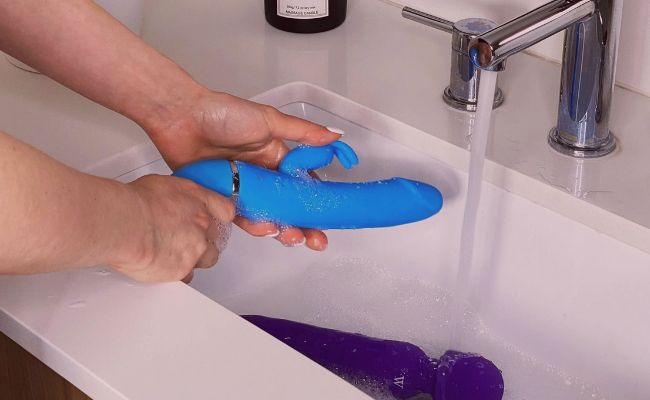
Clean a toy before and after use according to its instructions. Strong disinfectants, fragranced cleansers and products not designed for the material may damage the toy or leave irritating residue.
Rinse thoroughly and let the toy dry completely before storage. The sex-toy cleaning and care guide covers material and waterproofing considerations in more detail.
Do not move a toy from the anus to the vagina without washing it thoroughly and changing any condom or barrier. If a toy is shared, use a new barrier for each person and body opening, alongside appropriate cleaning.
How to Talk to a Partner About Dryness
Dryness can become emotionally charged when both people treat it as a verdict on desire. A short, direct conversation can prevent a great deal of hurt.
Try language such as:
- “I am interested, but my body needs more lubricant and a slower start.”
- “Dryness is physical; it is not a measure of how attracted I am to you.”
- “Penetration does not feel comfortable tonight, but I would enjoy other kinds of touch.”
- “Please let me control the depth and tell you when I want more.”
- “If I ask to pause, I need us to stop immediately without treating it as rejection.”
The partner’s role is not to fix the body or prove that the right technique will produce lubrication. It is to listen, remove pressure and help create choices.
Do not turn extra foreplay into another demand: “We did this for long enough, so you should be ready now.” Time and stimulation may help arousal-related dryness, but they do not reverse every hormonal or medical cause.
Intimacy can include kissing, massage, mutual masturbation, external toys, oral touch, fantasy, conversation or simply resting together. Penetration is one option, not the definition of successful sex.
When to See a Healthcare Professional
Arrange an appointment if:
- Dryness has lasted for a few weeks and self-care is not helping.
- Symptoms keep returning or affect daily life.
- Penetration is painful despite slowing down and using lubricant.
- You have unusual discharge, odour, sores, significant itching or a rash.
- You bleed after sex, between periods or after menopause.
- You have repeated urinary tract infections, urinary urgency or burning when urinating.
- Symptoms began after cancer treatment, pelvic surgery or a new medicine.
- You are unsure whether the problem is dryness, an infection, a skin condition or pelvic-floor pain.
Seek prompt medical help for heavy bleeding, severe pelvic or abdominal pain, fever, feeling acutely unwell or difficulty passing urine.
Bleeding after sex can have several causes, including dry or delicate tissue, but it should not automatically be attributed to friction—especially when it recurs or happens after menopause.
What to Expect at an Appointment
You deserve respectful, matter-of-fact care. A clinician may ask:
- When the symptoms began and whether they occur daily or mainly during sex
- Whether you have pain, itching, discharge, bleeding or urinary symptoms
- Where you feel discomfort—externally, at the entrance or deeper in the pelvis
- Whether you are pregnant, postpartum, breastfeeding, perimenopausal or postmenopausal
- Which medicines, contraception or cancer treatments you use
- Which soaps, intimate products, lubricants and toys contact the area
- Whether penetration has become difficult or anxiety-provoking
They may recommend an examination or testing depending on your symptoms. You can ask what an examination involves, request a chaperone and say if you need it to stop. If a previous examination was painful or traumatic, tell the clinician before it begins.
Treatment might involve removing an irritant, managing an infection or skin condition, using a vaginal moisturiser, changing a medicine under supervision, considering local or systemic hormone treatment, or referring you for pelvic-health support. The correct plan depends on the cause; you do not have to guess alone.
Common Myths About Vaginal Dryness
“It only happens after menopause”
Menopause is a common cause, but dryness can occur at any age, including during pregnancy, after childbirth, while breastfeeding, during certain treatments or after medication changes.
“If I were properly turned on, I would be wet”
Physical lubrication does not perfectly measure desire. You can want intimacy and still need lubricant.
“Using lubricant means something is wrong with me”
Lubricant is a comfort aid used by people across ages, bodies and relationship stages. It reduces friction; it does not assign a diagnosis or judge your sexuality.
“I should push through so my body gets used to penetration”
Pain can make the pelvic floor brace and increase anticipatory anxiety. Repeatedly pushing through may worsen the cycle. Stop, reduce friction and seek help if discomfort persists.
“A stronger vibrator will solve it”
Intensity does not hydrate tissue or treat an underlying hormonal or medical cause. A gentler external toy may support pleasure, but it is not medical treatment for persistent dryness.
“Any slippery household product is safe to use”
Body lotions, petroleum products and household oils may irritate tissue, damage toy materials or weaken latex condoms. Use a lubricant designed for sexual use and check compatibility.
Frequently Asked Questions
What is the best lubricant for vaginal dryness?
A simple water-based lubricant is the most broadly compatible starting point because it generally works with common toy materials and condoms. If it dries too quickly, reapply it or consider a longer-lasting formula that is compatible with your condom and toy. Sensitive tissue may prefer an unperfumed product without warming, cooling or tingling effects.
Is vaginal dryness normal before menopause?
It can happen before menopause, but “common” does not mean you must ignore it. Pregnancy, breastfeeding, medicine, hormonal contraception, cancer treatment, Sjögren syndrome, irritants, stress and insufficient arousal time can all contribute. Persistent or unexplained symptoms deserve assessment.
Can stress cause vaginal dryness?
Stress can affect desire, arousal and the body’s sexual response. It may be part of the picture, particularly when dryness occurs only in certain contexts. However, do not assume stress is the cause when symptoms are persistent, painful or accompanied by bleeding, discharge or urinary changes.
What is the difference between vaginal dryness and not being aroused?
Low arousal can reduce lubrication, but dryness can continue even when someone feels desire and receives enjoyable stimulation. Hormones, medicines and tissue changes can interrupt the physical response. Desire, consent, arousal and lubrication overlap, but none is a perfect substitute for the others.
Can I use a vibrator if penetration hurts?
External vibration may offer pleasure without penetration. Use a low setting, begin indirectly and stop if irritation increases. Do not use an insertable toy to stretch through unexplained pain. Pain at the entrance or deeper in the pelvis may need clinical or pelvic-floor assessment.
How often should I use a vaginal moisturiser?
Follow the instructions for the specific product or guidance from your healthcare professional. Vaginal moisturisers are usually used regularly rather than only before sex, and they may need consistent use before the full benefit is noticeable.
Does drinking more water cure vaginal dryness?
Staying hydrated supports general health, but drinking extra water does not reliably correct dryness caused by low oestrogen, medication, cancer treatment or a medical condition. Treat hydration as basic self-care, not a replacement for appropriate treatment.
Should I use a douche to feel cleaner when I am dry?
No. Douching can irritate the vagina and disrupt its normal environment. Clean the external vulva gently and avoid fragranced internal products.
When is bleeding after sex a concern?
Dry tissue can bleed with friction, but recurring bleeding, bleeding between periods or any bleeding after menopause should be assessed. Seek prompt care for heavy bleeding, severe pain, dizziness or feeling unwell.
Comfort Is a Valid Goal
Vaginal dryness is not a relationship verdict, an age limit on pleasure or a challenge you should overcome through endurance. It is a physical symptom with practical and medical options.
Begin by removing friction and pressure. Use a suitable lubricant generously, consider a vaginal moisturiser for day-to-day symptoms and choose external pleasure when penetration does not feel good. If symptoms persist, recur or arrive with pain, bleeding, discharge or urinary changes, speak to a healthcare professional.
Your body does not owe anyone a particular response. Comfortable intimacy can be slow, adaptable and centred on what feels safe and wanted today.


Leave a comment
This site is protected by hCaptcha and the hCaptcha Privacy Policy and Terms of Service apply.