



Article: Sex During Your Period: A Comfort, Hygiene and Sex-Toy Guide
Sex During Your Period: A Comfort, Hygiene and Sex-Toy Guide
Sex during your period can be comfortable and safe when everyone consents and you consider contraception, STI protection and hygiene. Pregnancy is still possible, and blood can increase exposure to certain infections, so condoms or other barriers may still be important. Remove tampons or menstrual cups before penetration, use body-safe toys and lubricant where needed, and stop if you experience unusual pain or heavy bleeding.
Periods come with enough rules that nobody asked for. You may have heard that sex during menstruation is dirty, unsafe, guaranteed to prevent pregnancy or somehow inappropriate. None of those ideas gives you the full picture.
For some people, sexual touch feels especially appealing during a period. Others feel tender, tired, crampy or entirely uninterested. You may enjoy external stimulation but not penetration, want closeness without sexual touch, or prefer to wait until the bleeding has finished. Every one of those responses is valid.
Sex during your period is generally a matter of comfort, consent and practical preparation rather than something you must avoid. Pregnancy and sexually transmitted infection (STI) risks do not disappear during menstruation, so use your usual contraception and barriers, remove standard tampons or menstrual cups before vaginal penetration, and choose activities that feel comfortable for your body.
This guide explains how to approach period sex without shame or pressure, including how to use sex toys, lubricant and condoms more safely, how to manage cleanup and when pain or unusual bleeding deserves medical attention.
Is It Safe to Have Sex During Your Period?
For most adults, consensual sexual activity during a normal menstrual period is not inherently unhealthy. Menstrual fluid is a normal mixture of blood, tissue and vaginal fluid. Being on your period does not make your body unclean, and intimacy during menstruation is not a hygiene failure.
That does not mean every activity is right for every person or every cycle. Your body may feel different from one month to the next, and a healthcare professional may advise you to avoid penetration temporarily after a procedure, during treatment, after childbirth, following pregnancy loss or because of a specific medical condition.
The most useful safety questions are:
- Do you genuinely want this today?
- Does the activity feel comfortable as it is happening?
- Are you using suitable contraception if pregnancy is possible?
- Are you using barriers and testing practices that match your STI risk?
- Have you removed any menstrual product that is not designed to remain in place during penetration?
- Are toys clean, intact and appropriate for the activity?
- Is the bleeding consistent with your usual period, rather than unexplained bleeding during or after sex?
If the answers feel reassuring, period sex can be approached much like sex at any other time: slowly, consensually and with permission to change direction.
Why Sex May Feel Different During Your Period
There is no universal “period sex” experience. Hormones, pelvic sensitivity, cramps, fatigue, medication, flow, mood and relationship context can all affect what feels appealing.
You may feel more sensitive
Some people notice that the vulva, clitoris or pelvis feels more sensitive during menstruation. This can make gentle touch feel especially pleasurable, but it can also make direct pressure or deep penetration feel too intense.
Begin below your usual intensity instead of assuming your body will want more. A setting or motion you normally enjoy may need to be gentler, broader or shorter during your period.
Desire can rise, fall or stay the same
Feeling more interested in sex during a period is normal. Feeling no interest at all is equally normal. Desire is influenced by far more than a menstrual-cycle calendar, and your response does not need to match an app prediction or a partner’s expectation.
If desire tends to appear only after comfortable touch begins, you may recognise the pattern described in Dear Desire’s guide to responsive desire. Curiosity can be a valid starting point, but it is never an obligation to continue. “Let’s see how I feel” must always include an easy, respected way to stop.
Cramps and pelvic pressure can change what feels good
Some people report temporary cramp relief or relaxation after arousal or orgasm. Others experience stronger cramping, pelvic pressure or discomfort. Pleasure should not be presented as a treatment that you must try, and pain is not something to push through in pursuit of a supposed benefit.
If you are crampy, consider external stimulation, shallower movement, a side-lying position or non-sexual closeness. Stop if pain becomes sharp, severe, unfamiliar or progressively worse.
Menstrual flow is not the same as lubricant
Blood and menstrual fluid may create extra wetness, but they do not reliably provide the lasting glide of a personal lubricant. Friction can still occur, particularly with condoms, toys, longer sessions or hormonal changes that affect vaginal moisture.
A small amount of compatible lubricant can make touch more comfortable and help protect condoms from friction. Do not wait until something hurts before reaching for it.
Consent Matters More Than the Calendar
Period sex often carries emotional layers that have little to do with physical safety. One person may feel self-conscious about blood, smell or staining. A partner may be inexperienced, unsure or worried about saying the wrong thing. The goal is not to persuade anyone to become “less squeamish.” It is to create enough honesty for both people to make a free choice.
Try a simple conversation before clothes come off:
- “I’m on my period. I’m open to being close, but I may want to keep things external.”
- “I’d enjoy sex, but I want to put a towel down first.”
- “Penetration does not feel good today. Would you be interested in massage or mutual touch instead?”
- “I’m not sure how my body will respond, so can we start slowly and check in?”
- “I don’t want sexual touch tonight, but I would love to cuddle.”
Nobody needs to apologise for menstruating, and nobody must participate in an activity they do not want. A respectful partner can have a preference without shaming the person who is bleeding. The answer may also change midway through the experience.
If blood makes either person light-headed, anxious or uncomfortable, choose another kind of intimacy. Consent is not more evolved because it ignores discomfort.
A Low-Pressure Setup for Period Sex
Preparation is not about making menstruation invisible. It simply removes distractions so you can focus on how the experience feels.
Choose the time that suits your body
Flow and energy may vary across your period. You might prefer lighter days, a morning when cramps are calmer or a shower before bed. There is no medically superior “best day” for period sex; there is only the day that feels manageable to you.
Protect the surface if stains will distract you
A dark towel, washable absorbent pad or older sheet can reduce worry about bedding. Keep it flat so it does not bunch beneath your body. If you use an electric blanket, heating pad or mains-powered device, keep liquids away from the electrical components and follow the product’s safety instructions.
Keep useful items within reach
Depending on the activity, you might want:
- a towel or absorbent pad;
- tissues or a clean cloth for hands;
- condoms or other suitable barriers;
- compatible lubricant;
- a clean toy and its controls;
- a container or surface for a removed menstrual product;
- water and any usual comfort items you use for cramps.
You do not need to turn the bedroom into a medical station. A little preparation is enough.
Use gentle, specific check-ins
“Are you okay?” can be hard to answer honestly in the middle of intimacy. More specific questions make adjustment easier:
- “More pressure, less pressure or the same?”
- “Would external touch feel better?”
- “Do you want to continue, pause or stop?”
- “Is this depth comfortable?”
A pause is information, not a ruined mood.
Period-Sex Ideas for Different Comfort Levels
Sex does not have to mean penile-vaginal penetration. Expanding the menu can make period intimacy feel more comfortable and less performance-driven.
External stimulation
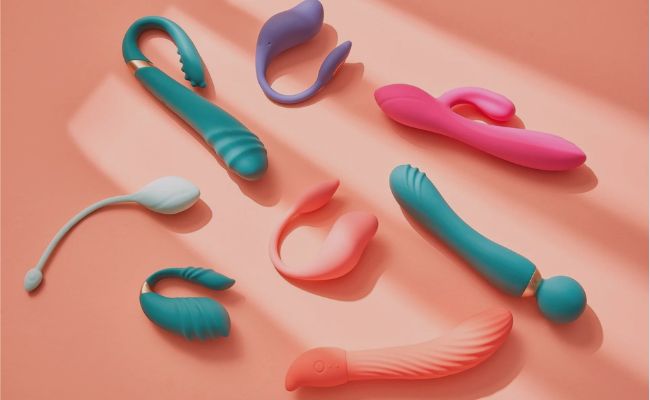
External touch is often the simplest place to begin because it avoids vaginal penetration and can be adjusted instantly. Hands, a compact vibrator or a broader external massager can be used over underwear, beside the clitoris or around the vulva according to preference.
The clitoral vibrator collection includes different contact styles, from precise tips to broader palm-shaped designs. A bullet vibrator can also be useful when you want something light, easy to reposition and simple to stop.
Start on a low setting. If direct stimulation feels too intense, try the side of the toy, use it over underwear or move around the clitoris rather than holding it in one place.
Mutual touch or mutual masturbation
Partners can touch themselves or each other without penetration. This allows the menstruating person to control pressure and position while still sharing the experience. It can also reduce the feeling that one person is responsible for making every decision.
Use separate toys unless they are cleaned or covered with a fresh condom before changing users. Hands should be washed when moving between bodies or between the anus and vulva.
Massage and non-genital touch
A back, scalp, hand or foot massage can create closeness without involving menstrual flow at all. Agree whether the massage is complete in itself or whether sexual touch might be considered later. This prevents relaxation from turning into an unspoken promise.
If you use a body massage oil or candle, remember that it is not automatically suitable for genital use or compatible with latex condoms. Switch to an appropriate personal lubricant before intimate contact.
Vaginal penetration
If penetration feels welcome, begin gradually. Use lubricant, keep depth under the receiving partner’s control and choose a position that allows easy stopping. Side-lying positions or being on top may feel more manageable for some people because pressure and depth can be adjusted quickly.
Deep penetration may feel uncomfortable when the pelvis is sensitive. Shallower movement is not a lesser version of sex; it may be exactly what the body wants that day.
Shower intimacy
A shower can make cleanup feel simpler, but it is not compulsory and it is not automatically safer. Water can wash away natural moisture and water-based lubricant, tiled surfaces can be slippery, and a toy must be genuinely rated for shower use.
If you want to bring a vibrator into the shower, choose only a model whose manufacturer confirms the required waterproof rating. Dear Desire’s waterproof-toys collection can help you compare suitable designs, while the waterproof sex-toy guide explains why “splashproof,” “water-resistant” and “waterproof” are not interchangeable.
Use a non-slip mat, keep balance in mind and never bring a plugged-in electrical device into the bath or shower.
Can You Use Sex Toys During Your Period?
Yes, sex toys can generally be used during menstruation when the activity is comfortable, the product is suitable and normal safer-sex and care practices are followed. A period does not require a special “menstrual toy.” It may, however, change which design feels easiest to use.
External toys are an approachable option
An external vibrator avoids insertion and can be used while wearing a pad or period underwear if that feels more comfortable. Place the toy only where the product is designed to be used, and keep adhesive wings, fabric edges and cords out of the way.
External toys can also be useful when vaginal tissue feels tender or when you want pleasure without removing an internal menstrual product. Do not insert another object while a standard tampon or menstrual cup is in place.
Insertable toys require comfort, space and easy control
Remove a tampon or conventional menstrual cup before vaginal penetration. Leaving one in can make penetration uncomfortable, push the product higher or make removal more difficult.
Some menstrual discs are marketed as suitable for certain forms of penetrative sex because they sit higher in the vaginal fornix. That claim does not apply to every disc, every body or every sexual activity. Follow the instructions for the exact product, stop if there is discomfort or leaking, and do not assume a menstrual disc provides contraception or STI protection.
For an insertable toy, choose a familiar, manageable size rather than treating increased pelvic sensation as an invitation to go larger. Use lubricant and control the depth. If your cervix or pelvis feels tender, switch to external stimulation.
Choose a surface you can clean confidently
Smooth, non-porous materials from transparent manufacturers are generally easier to clean thoroughly than soft, porous or vaguely described materials. Quality silicone, ABS plastic, stainless steel and properly manufactured glass are common examples, but the construction of the complete toy still matters.
Read Dear Desire’s body-safe sex-toy materials guide if you are comparing silicone, TPE, glass, metal or coated products.
Do not use a toy with cracks, tears, peeling surfaces, rough seams, persistent odour or a sticky texture that returns after washing. Menstrual blood may make damage easier to notice, but the same inspection should happen before every use.
Waterproofing helps with care, but does not replace care instructions
A fully waterproof toy may be easier to rinse, but its official instructions still determine how it should be washed. “Water-resistant” may mean the surface can tolerate splashes, not that the product can be submerged.
Keep charging cables disconnected during cleaning. Do not soak a remote, pump, battery compartment or charging case unless the manufacturer explicitly confirms that component is waterproof too.
Lubricant During Period Sex
Lubricant is useful whenever friction, drag or sensitivity makes touch less comfortable. Being on your period does not remove the need to consider compatibility.
Water-based lubricant
A water-based lubricant is the easiest general starting point. It is broadly compatible with common toy materials and latex condoms, and it usually rinses from skin and bedding more easily than oil-based products. It may need to be reapplied, especially in the shower.
Silicone-based lubricant
Silicone lubricant tends to last longer and does not rinse away as quickly in water. It may be useful for shower play or longer sessions, but it is not automatically compatible with silicone toys. Check the instructions for both the lubricant and the toy before combining them. It can also stain some fabrics.
Oil-based products
Oil can damage latex condoms and may be difficult to remove from toys, skin and bedding. Do not use massage oil, body lotion, petroleum jelly or a household oil as an improvised intimate lubricant. A product that is pleasant on shoulders may not be appropriate for vulval or vaginal use.
If a lubricant causes burning, itching or swelling, stop using it and rinse the external area gently. Persistent symptoms, unusual discharge or odour should be assessed by a healthcare professional rather than repeatedly treated as a product problem.
Pregnancy Is Still Possible During a Period
Menstruation is not reliable contraception. Pregnancy from sex during a period may be less likely at some points in some cycles, but it is possible.
Ovulation does not happen on the same day for every person or every cycle. People with shorter or irregular cycles may ovulate soon after bleeding ends, and sperm can survive in the reproductive tract for several days. Bleeding that looks like a period may also occasionally have another cause.
If pregnancy is possible and not wanted, continue using your chosen contraceptive method correctly. A condom can add STI protection and additional pregnancy prevention, but it needs to be used from the beginning of genital contact where pregnancy or infection transmission is possible.
If unprotected sex has happened or a condom has failed, emergency contraception may be time-sensitive. Contact a pharmacist, clinic or healthcare professional promptly for advice suited to your circumstances.
STI Protection Still Matters During Menstruation
A period does not protect anyone from HIV or another STI. Some infections can be transmitted through blood and other body fluids, while others spread through skin-to-skin contact. A partner may have an STI without visible symptoms.
Use barriers according to the activity and your shared testing agreements:
- external condoms for penile-vaginal or penile-anal sex;
- suitable condoms over compatible insertable toys when sharing;
- a fresh condom when a toy changes between partners or body openings;
- dental dams or another suitable barrier for oral-vulval or oral-anal contact;
- gloves when cuts, broken skin or hand hygiene make them useful.
Dear Desire’s condom collection includes options with listed materials and dimensions. If latex is not suitable, choose a non-latex product that is specifically approved for STI and pregnancy protection rather than improvising with food wrap or an unverified barrier.
Condoms reduce risk but do not cover every area of skin, so they offer less protection against infections spread from uncovered sores or skin. Testing, honest communication and vaccination where appropriate remain part of sexual healthcare.
Sharing Sex Toys During a Period
Body fluids can remain on a toy and pass between users. Menstrual blood makes that transfer more visible, but the underlying safer-sharing principles apply every day of the cycle.
For lower-risk sharing:
- Choose a non-porous toy that can be cleaned according to clear instructions.
- Put a compatible condom over the toy when appropriate.
- Change the condom before the toy touches another person or a different body opening.
- Wash the toy according to the manufacturer’s directions between users.
- Never move a toy from the anus to the vagina without a fresh barrier and proper cleaning.
- Keep toys with cuts, tears or porous surfaces for individual use rather than sharing them.
A condom does not make an unsafe shape suitable for anal use. Any insertable anal toy still needs a flared base or another design that prevents it from being drawn into the rectum.
Cleaning Sex Toys After Period Use
Menstrual blood does not require bleach, alcohol, boiling water or a stronger-than-usual disinfectant. Harsh products can damage materials and leave irritating residue. The correct method depends on the toy’s material, waterproof rating, motor, seams and removable parts.
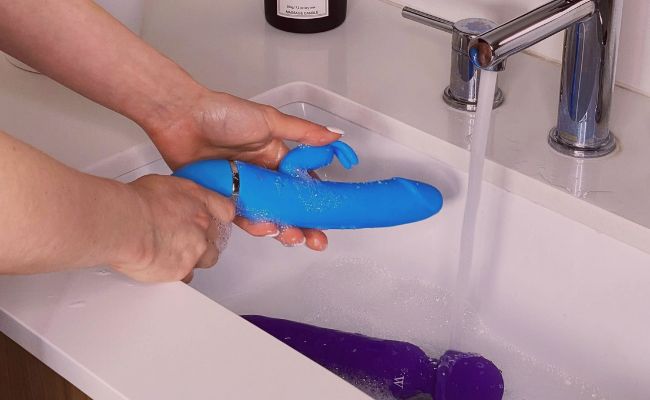
A simple routine is:
- Switch the toy off and disconnect it from the charger.
- Remove only the parts the manufacturer says are removable.
- Rinse approved waterproof surfaces with warm water, or wipe an unrated electronic toy with a damp cloth.
- Use mild, unscented soap or a compatible product from the sex-toy cleaner collection when the instructions allow it.
- Clean grooves, rims and textured areas gently.
- Rinse away all cleanser residue from washable surfaces.
- Pat dry and allow every part to air-dry completely before storage.
- Inspect for damage or changes in texture.
Do not assume a toy can be boiled because the outer layer is silicone. Motors, batteries, charging systems, adhesives and mixed materials can all be damaged by heat or immersion. The complete routine is covered in How to Clean Sex Toys Safely.
Wash hands and any reusable barrier according to its instructions. Wipe hard surfaces with an appropriate household cleaner, place towels or sheets in the laundry and dispose of condoms in a bin rather than flushing them.
There is no need to douche or wash inside the vagina. The vagina cleans itself, and internal cleaning can disrupt its normal environment. Wash the external vulva gently with water; if you use a cleanser, choose one intended for external use and stop if it irritates you.
What About Odour and Staining?
Fresh menstrual blood may have a mild metallic smell. A noticeable change in odour does not automatically mean something is wrong, but a strong unpleasant or fishy smell—especially with unusual discharge, itching, burning or pain—deserves medical advice.
For fabric, rinse fresh blood with cold water as soon as practical. Hot water can set protein-based stains. Follow the care label and test any stain remover on an inconspicuous area. Do not apply laundry products to intimate skin or sex toys.
If concern about mess is preventing you from relaxing, keep the activity external, use the shower with a truly waterproof toy, or choose another day. Comfort includes mental comfort.
When Period Sex Should Pause
Stop the activity if you experience:
- sharp, severe or escalating pelvic pain;
- burning, tearing or persistent vaginal pain;
- dizziness, faintness or feeling suddenly unwell;
- bleeding that is much heavier than your usual flow;
- a toy, tampon or menstrual product that cannot be removed easily;
- marked swelling, injury or a possible allergic reaction;
- a condom breaking when pregnancy or STI exposure is a concern.
Seek medical advice if periods become much heavier, more painful or irregular; pain interferes with daily life; sex is repeatedly painful; you bleed between periods or after sex; or you have unusual discharge, fever, pelvic pain or urinary symptoms.
Bleeding after sex should not automatically be dismissed as menstrual blood, particularly when it happens outside your expected period or keeps recurring. A clinician can check for causes such as dryness, infection, cervical changes, polyps or other conditions.
If you have recently missed a period and now have unusual bleeding with abdominal or pelvic pain, seek urgent medical care because an ectopic pregnancy is one possible cause.
A Practical Period-Sex Checklist
Before you begin:
- Confirm that everyone genuinely wants the activity.
- Agree on what is welcome and what is off-limits.
- Remove a tampon or conventional menstrual cup before vaginal penetration.
- Check the instructions if using a menstrual disc.
- Put down a towel if it will help you relax.
- Check condoms, lubricant and toys for expiry, damage and compatibility.
- Clean toys before use and confirm their waterproof rating.
During:
- Begin more gently than usual.
- Use lubricant rather than relying on menstrual flow.
- Keep depth and intensity easy to control.
- Change condoms between partners or body openings.
- Stop for pain, numbness, dizziness or a concerning change in bleeding.
After:
- Hold the condom at the base during withdrawal and dispose of it in a bin.
- Clean toys according to their instructions.
- Wash the external genital area gently; do not douche.
- Notice how your body feels without treating ordinary mess as a crisis.
- Seek advice if pain, unusual bleeding or other symptoms persist.
Period Sex Is an Option, Not an Expectation
There is nothing shameful about wanting sex during your period, and nothing prudish about not wanting it. The most satisfying choice is the one that respects your body as it feels today—not the version of your body you think you should have.
Keep the essentials simple: communicate, protect against pregnancy and STIs where relevant, remove unsuitable menstrual products before penetration, use compatible lubricant, clean toys correctly and stop when something hurts. Period sex does not need to be a bold statement or a complicated ritual. It can simply be one more consensual way to experience pleasure, closeness or curiosity.
Frequently Asked Questions About Sex During Your Period
Yes. The chance may be lower at certain points in some cycles, but it is not zero. Early ovulation, shorter or irregular cycles and sperm survival for several days mean pregnancy can occur. Use reliable contraception if you do not want to become pregnant.
No. Menstruation is a normal body process, and period sex is not inherently dirty. Use the same sensible hygiene you would at other times: clean hands and toys, fresh barriers, an intact surface and gentle external washing afterwards.
A condom is recommended when pregnancy is possible or STI protection is needed. Menstruation does not prevent either outcome. Use a new condom for every act and change it when a toy or penis moves between body openings.
Yes, provided the toy is clean, intact and used as designed. External vibrators are often an easy option when penetration feels uncomfortable. For insertable toys, remove tampons and standard menstrual cups first, use lubricant and stop if the pelvis feels tender.
Remove a tampon before vaginal penetration. Penetration can push it higher, compress it or make it difficult to remove. If a tampon becomes stuck and you cannot remove it gently, contact a healthcare professional.
A conventional menstrual cup should be removed before vaginal penetration. Some menstrual discs are designed to remain in place during certain kinds of penetrative sex, but suitability varies by product, anatomy and activity. Follow the exact manufacturer’s instructions; a disc is not contraception or STI protection.
It may make cleanup easier for some people, but “better” is personal. Water can reduce lubrication and tiled surfaces can be slippery. Use a non-slip mat, add compatible lubricant when needed and take only products confirmed as waterproof into the shower.
Some people notice that flow seems temporarily heavier after orgasm or that the period appears to end sooner, possibly because uterine contractions move fluid that was already present. This is not predictable, and sex should not be treated as a reliable way to shorten a period.
Pelvic sensitivity, cramps, dryness, pressure against the cervix or an underlying condition may contribute. Try less depth, more lubricant, external stimulation or another day. Recurrent or significant pain during sex deserves assessment, especially when periods are also very painful or heavy.


Leave a comment
This site is protected by hCaptcha and the hCaptcha Privacy Policy and Terms of Service apply.