




Article: Accessible Sex Toys: A Practical Guide to Grip, Reach and Comfort
Accessible Sex Toys: A Practical Guide to Grip, Reach and Comfort
A toy can look beautiful, have excellent reviews and still be awkward to use. Perhaps the handle is too narrow to hold comfortably. Perhaps the button sits exactly where your thumb cannot reach. Or perhaps the sensation is lovely, but getting everything ready takes more energy than you wanted to spend.
Those are product-fit problems, not personal failures.
If you are looking for accessible sex toys in South Africa, the most useful starting point is not a diagnosis or a list of bestselling products. It is understanding which parts of the experience you want to make easier: holding, reaching, positioning, adjusting, stopping, cleaning or storing.
You might live with a disability, arthritis, chronic pain or fatigue. You might have temporary restrictions after an injury, or simply prefer a toy that asks less of your hands. You do not need to justify wanting a more comfortable experience.
This guide explains how to compare practical features without assuming that everyone with similar access needs wants the same sensation. The aim is pleasure on your terms, not another task your body has to complete.
The Quick Answer: What Makes a Sex Toy Accessible?
An accessible sex toy is one you can use, control and care for in a way that works for you. Accessibility is a relationship between the product, your body, your environment and any support you choose—not a promise made by a particular shape.
Useful features may include:
- A grip that feels secure without constant squeezing.
- A handle that provides comfortable reach.
- Buttons you can distinguish and operate.
- A straightforward way to reduce intensity and stop.
- A remote or app, if that is easier for you to use.
- A setup and cleaning routine you can realistically manage.
No single feature guarantees accessibility. A longer handle may improve reach but feel tiring to hold. A tiny toy may weigh less but demand a fiddly pinch grip. A wearable may reduce holding once positioned while requiring more effort to fit and remove.
Before choosing between Dear Desire’s vibrators, decide which task you most want the product to simplify.
Start with the Experience You Want
Access needs matter, but they do not replace your preferences.
You may want broad external vibration, focused contact, a manual stroker or an insertable design. You may prefer predictable sensation over changing patterns. You may want something for solo time, partnered use or both. None of these choices can be inferred from your mobility or the way your body looks.
Try finishing these three sentences:
- “The sensation I would like is…”
- “The part I want to make easier is…”
- “The thing I do not want to deal with is…”
For example: “I like external vibration. I want less fiddling with a small handle. I do not want to use my phone.” That gives you a clearer brief than “I need a disability-friendly vibrator.”
Another person might say: “I enjoy my existing toy, but reaching the controls is difficult. I am comfortable using an app.” Their shortlist could look completely different.
You can also want closeness without genital stimulation, penetration or orgasm. Choosing no toy today is an equally valid outcome. A product should offer an option, not become evidence that you are trying hard enough.
Identify the Task That Gets in the Way
Walk through the whole experience rather than concentrating only on the moment the toy is switched on.
Holding
Does gripping become uncomfortable? Is a narrow handle difficult to keep between your fingers? Would a shape supported by more of your palm feel preferable?
Think about the grip you actually use. A product photo showing a delicate fingertip hold does not tell you whether the same toy will work in a different hand position.
Reaching and positioning
Is the difficulty getting a toy into place, keeping it there or both? Would a longer handle help, or would changing your supported position make more difference?
The shortest product is not always the easiest to reach with. Equally, extra length is not useful if the handle becomes awkward to balance.
Changing settings
Can you adjust the intensity without repositioning your whole hand? Do you need to see the buttons, or can you identify them by touch? Is pressing and holding a button manageable?
Include switching off in this assessment. Being able to start a toy is only half the question.
Preparing and putting away
Opening packaging, connecting a charger, dispensing lubricant and cleaning removable parts all count. A toy that is easy during use can still be inconvenient afterwards.
Make a short list of your two biggest obstacles. Keeping the brief specific helps prevent an attractive feature you do not need from distracting you from one you do.
Seven Features Worth Comparing Before You Buy
1. Grip shape: small does not automatically mean easy
A compact bullet can be convenient, but its small surface may require more precise finger control than a broader design. A palm-shaped toy gives you a different holding option, although its curves still need to suit your hand.
Look at photos from several angles. Ask where your fingers would rest, whether the controls would be covered and how you would turn the toy over. If one hand will do most of the work, imagine operating it with that hand rather than copying the photograph.
Treat words such as “ergonomic” as an invitation to inspect the shape. They do not establish that the product will fit you.
2. Weight and balance: consider where the weight sits
Check the product weight where available, but also consider its distribution. A head-heavy toy may feel different from a similarly weighted product supported close to your palm.
Would you be holding it away from your body? Could your forearm rest comfortably on a support? Would keeping it in position require a sustained wrist angle?
These are comparison questions, not a strength test. If a listing omits weight, ask for the figure rather than assuming that a small photograph means a lightweight toy.
3. Handle length: useful reach without unnecessary bulk
A longer handle is worth considering when reaching your preferred area is the main obstacle. However, compare usable handle length, not just overall length. A large head or decorative base can make a product look longer without giving your hand more room.
Ask where the buttons sit relative to your grip. A handle that reaches comfortably but puts its controls out of reach may solve one problem while creating another.
When browsing wand vibrators, consider both mini and larger formats. Neither is automatically the accessible choice.
4. Controls: inspect the actual button sequence
Two products with the same number of buttons can operate differently. One might offer separate increase and decrease controls. Another might require repeated presses to cycle through every mode.
Useful questions include:
- How do I switch it on and off?
- Can I lower the intensity directly?
- Is there a long press or a two-button combination?
- Does it remember the previous setting?
- Is there a lock, and how is it released?
A memory function may save navigation, but you still need to know what happens on restart. Ask for the manual before purchasing if the listing does not explain these details.
5. Sensation range: look beyond maximum power
The strongest setting tells you little about whether the gentlest one will feel comfortable. Likewise, a large number of patterns does not tell you how easy the toy is to navigate.
Think about what you already enjoy: steady sensation, gradual changes, broad contact or a smaller contact point. Product descriptions cannot predict your response, so avoid treating “powerful” as a substitute for suitable.
If sensation is reduced or altered because of a health condition, stronger or longer stimulation is not automatically the right answer. Ask your clinician about relevant precautions rather than using intensity to test what your body can tolerate.
6. Charging: include the small practical steps
Look at how the supplied charger connects. Does it require aligning magnetic contacts, inserting a small pin or opening a cover? Could you do that comfortably, or would you prefer occasional help?
Magnetic charging can remove one kind of fiddling while introducing another: the connection still needs to remain properly aligned. Battery compartments involve their own caps and handling requirements.
Follow the exact charging instructions. Do not assume that a cable fits safely simply because it looks similar to another one you own.
7. Care: choose a routine you can sustain
Read cleaning instructions before buying, especially if washing, disassembly or drying is difficult. Ask how many parts come apart and whether they need individual attention.
A waterproof rating does not mean every cleaning method is permitted. Boiling, soaking or using household disinfectant may be inappropriate for the particular product.
Our sex-toy cleaning and care guide provides a useful overview, but the instructions supplied with your exact model should guide its routine.
Comparing Toy Styles Through an Accessibility Lens
Rather than asking which category is best for disabled people, compare what each format asks you to do.
| Format | Why it may be worth considering | What to check carefully |
|---|---|---|
| Palm-shaped external vibrator | A broader shape may suit your preferred hold | Grip, button position and comfortable reach |
| Handled wand | A handle offers another way to reach and guide external contact | Weight, balance and usable handle length |
| Compact bullet | Takes up little storage space | Pinch grip, small controls and positioning |
| Remote- or app-controlled toy | Settings may be adjusted away from the toy | Setup, controller usability and a reliable stopping method |
| Wearable design | May reduce continuous holding once comfortably positioned | Fitting, removal, shifting and access to controls |
| Manual stroker | Offers direct control without a powered interface | Grip, repeated movement, disassembly and drying |
These are starting points for questions, not accessibility ratings. Within each category, individual products can differ substantially.
If a handled format makes your shortlist, our wand vibrator buying guide explores that category in more detail. Use it to compare designs after you have identified your handling priorities.
If you prefer external-only contact, clitoral vibrators offer several shapes to compare. Focus on the contact surface and handling rather than assuming that a product’s gendered marketing determines who can consider it.
If you are comparing male masturbators, look beyond the internal texture. Think through how you would hold the case, move it, manage any controls and remove the sleeve for cleaning. A motor does not necessarily remove those tasks.
Two Product Examples: Features, Not Medical Recommendations
The following products illustrate different design choices. Neither is a treatment or a universally accessible option. Suitability depends on your preferred sensation, your practical needs and any condition-specific advice.
Fun Factory Laya 3: a palm-shaped external option
The Fun Factory Laya 3 is a rechargeable external vibrator with a curved lay-on shape, seven speeds, three patterns, a memory function and a travel lock.
Its broader body is worth comparing if you dislike holding a narrow bullet between your fingertips. The manufacturer describes two-button control, including fine adjustment by holding the increase or decrease button.
Before choosing it, check whether you can reach those controls in your intended grip and whether holding a button is comfortable. Its compact shape may appeal for palm support, but it does not provide the reach of a long handle.
Choose it for a closer look if a broad external format interests you—not because you have been promised that it will suit every hand or eliminate effort.
ROMP Presto: a handled external option
The ROMP Presto is a rechargeable mini wand with a soft silicone head, six vibration intensities and four patterns. The manufacturer lists two-button control and an overall length of 20 cm.
That handle provides a different holding and reaching option from a palm-shaped toy. Whether it is preferable depends on where your hand would sit and how the wand balances in your chosen position.
Check the switching sequence: the manufacturer describes a three-second hold to turn it on and a three-second hold to switch it off. A long press may be straightforward for one person and inconvenient for another.
Consider it if you want to compare a handled design. Do not assume that “mini wand” means weightless, effortless or suitable for every reach limitation.
Read the model's safety instructions as well as its feature list. ROMP advises consulting your physician if you are under medical care or have a condition requiring a medical device, and understanding safe operation before use.
Are Remote and App Controls Easier?
Sometimes—but separate two questions: “Can I reach the toy?” and “Can I operate the controller?”
A remote may let you change settings without reaching around your body. An app may put controls on a screen you already use comfortably. Either can also introduce extra steps, including charging, pairing, navigating menus or finding a dropped controller.
Before buying, ask whether your particular phone is compatible, whether the app works with the accessibility settings you rely on and which functions are available directly on the toy. Do not assume that every app supports your preferred screen reader, voice controls or alternative input method.
Browse app-controlled toys by the functions you need, not by the number of smart features advertised. A simple physical controller may be preferable to an elaborate app; for someone else, the opposite will be true.
Most importantly, establish how stimulation will stop if the connection drops or the screen becomes unavailable. Check the manual or ask the manufacturer rather than guessing.
If a partner controls the settings, agree on a clear stop signal and make sure they can respond immediately. Giving someone access to an app does not mean giving permanent permission to use it.
Hands-Free Is Not the Same as Effort-Free
“Hands-free” describes part of an experience. It does not tell you how much effort is required before or afterwards.
A wearable may need careful fitting, compatible clothing or repositioning. A holder may need assembly and a suitable surface. A remote still needs to remain accessible. An insertable product still needs comfortable placement and removal.
Before choosing one, ask:
- Can I position it in the way the manufacturer intends?
- Can I remove it comfortably?
- Can I stop it without relying on an unreliable connection?
- What would I do if it shifted?
- Can I manage the cleaning afterwards?
Avoid improvising tight straps, taping a powered toy to your body or covering controls to force a hands-free arrangement. If you need an adaptive holder or positioning solution, an occupational therapist can help you think through appropriate options.
There is no prize for using a toy without your hands. The useful goal is a setup that gives you the comfort and control you want.
Prepare a Comfortable Setup Before Switching On
Start with a position that already feels comfortable within your usual movement limits. You do not need to copy a photograph or aim for an impressive-looking pose.
If appropriate for you, pillows or positioning supports may help you settle without holding an awkward posture. Keep your usual pressure-relief and positioning advice in mind, particularly if sensation or mobility is reduced. Following surgery or joint replacement, use your own clinical team's restrictions rather than a general online position suggestion.
Put the things you expect to need within reach: the toy, compatible lubricant, controller and whatever you use for the recommended clean-up. Consider where each item will go when you put it down.
Practise finding the buttons and switching the toy off before bringing it into contact with sensitive skin. Learning the controls can be the entire first session if that is what suits you.
You might try one grip, notice what is awkward and stop there. That is useful information. Comfort is something you can explore gradually, not something you must prove by persisting.
Plan Around Energy Without Making Pleasure an Obligation
Pain and fatigue can vary, so a setup that works one day may feel unappealing on another. That does not make your earlier preference wrong.
If useful, prepare ordinary practical things separately: charge the toy in advance, check the instructions when you have time and keep its accessories together. This may make the eventual choice simpler, but preparation never creates a duty to continue.
Think in terms of options rather than a fixed appointment. You might want a short session, shared touch without a toy or privacy with no particular goal. Rest is not a failed version of intimacy.
If fatigue or pain is interfering with the sexual experiences you want, you can discuss this with your healthcare team. Do not change medication timing or doses on the basis of a shopping guide. Practical adaptation and medical advice have different roles.
Lubricant and Hygiene Without Unnecessary Complexity
Use a lubricant compatible with both your toy and any barrier protection. Water-based lubricant is a useful starting point for many toys; confirm the product instructions rather than assuming universal compatibility. ROMP recommends water-based lubricant for the Presto.
When choosing from water-based lubricants, consider the bottle as well as the formula. Could you open the lid, dispense what you need and close it again comfortably? A pump or flip cap may suit different hands differently. Ask about the packaging if it is unclear.
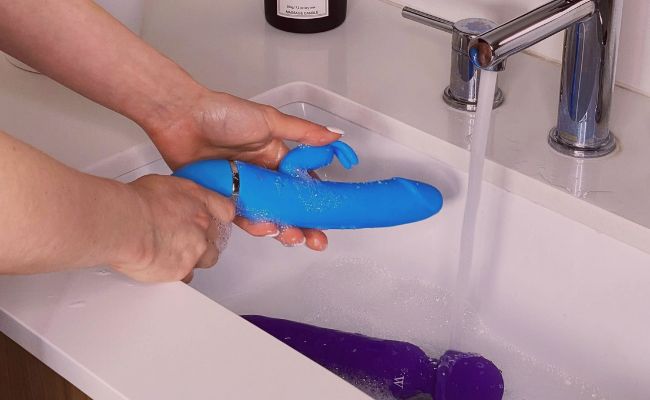
Clean toys before and after use according to their instructions. If sharing a suitable toy, use a fresh condom for each partner and when moving between body openings, alongside appropriate cleaning. A barrier does not replace the product's care routine.
Let the toy dry as directed before putting it away. If cleaning involves steps you cannot manage independently, decide what support you would welcome before buying. There is nothing wrong with assistance; it should be chosen rather than an unexpected requirement.
Keep Choice and Consent at the Centre
Practical support should leave the person receiving the sensation in charge of what happens to their body.
A partner can ask, “Would you like help positioning this, changing the setting, both or neither?” That is more useful than assuming that visible difficulty means help is wanted.
If speech is tiring or unavailable, agree on a communication method that works for everyone involved before starting. Make sure a pause or stop signal can be recognised reliably. Do not continue when communication becomes unclear.
You can consent to help with setup without consenting to sexual contact. You can enjoy a sensation and still want it to stop. You can change your mind after a product has been bought, unpacked or charged.
Your preferences also remain yours if a partner is excited about a particular toy. An access need is not an invitation for someone else to choose your experience.
If starting that conversation feels awkward, our communication-first guide to introducing toys with a partner offers a separate place to explore the discussion. You do not have to solve the shopping decision and the relationship conversation at the same time.
When Individual Medical Advice Matters
A retail guide can help you compare handles and controls. It cannot determine which stimulation, positioning or duration is safe for a particular health condition.
Seek individual advice before experimenting if you have reduced genital sensation, fragile or broken skin, recent surgery, unexplained pain, significant movement restrictions or another condition that changes the precautions you need. Avoid using a toy over injured or irritated skin. Stop if use causes pain, new numbness, bleeding or skin damage, and seek care when symptoms are significant or persist.
With reduced sensation, the absence of pain does not reliably establish that pressure or friction is harmless. Ask about skin checks, pressure relief and any personal limits rather than simply increasing intensity.
People with spinal cord injury, particularly at T6 or above, should discuss autonomic dysreflexia with their rehabilitation team. Sexual stimulation can trigger this potentially life-threatening rise in blood pressure. If you develop a sudden pounding headache, flushing or other signs covered by your care plan, stop stimulation, follow that plan and seek urgent medical assistance. This requires condition-specific preparation, not just a gentler toy.
An occupational therapist may help with grip and adaptive equipment; a physiotherapist may help with positioning. A qualified sex therapist can support questions around communication, adjustment and sexual expectations. You are allowed to raise pleasure as a legitimate part of your care.
How to Ask for Product Help Without Sharing Your Diagnosis
You do not have to disclose your medical history to get useful shopping information. Describe the task you need to make easier.
For example: “I would like an external vibrator. Narrow handles are difficult for me, and I need to know how the off button works.”
Or: “Please can you confirm the weight, show me the charging connection and tell me whether the intensity can be reduced without cycling through every pattern?”
You can contact Dear Desire with those practical questions. Ask for missing specifications, instructions or clarification of the exact model. Product guidance should help you make a decision without pretending to replace clinical advice.
Before paying, check the current product details, warranty and return terms. Do not assume an intimate product can be returned simply because its grip does not suit you. Resolving the important questions upfront is especially worthwhile when shopping online.
Accessible Sex Toys: Frequently Asked Questions
What is the best vibrator for limited hand mobility?
There is no universal choice. Compare grip shape, usable handle length, weight, button operation and the stopping method. A palm-shaped vibrator and a handled wand are different options to investigate, not automatic recommendations for a particular diagnosis.
Is a lighter toy always better for arthritis?
Not necessarily. A very small toy may be fiddly, while a broader one may suit your preferred grip. Weight, balance and controls need to be considered together. For joint-specific limitations, ask your healthcare team about suitable handling and positioning.
Do accessible sex toys have to be app-controlled?
No. Some people prefer familiar phone controls; others find pairing and screen navigation inconvenient. Straightforward physical buttons can be the better fit. Accessibility is about what you can use comfortably, not how much technology a product contains.
Can a toy help if sensation has changed?
Some people find vibration helpful, but responses differ and a toy cannot guarantee restored sensation or orgasm. A persistent or unexplained change deserves medical assessment. If sensation is reduced, get personal advice about skin protection and safe use before experimenting with stronger settings.
What if I need help cleaning or setting up?
You can choose assistance and still remain in charge of the experience. Think through privacy, boundaries and practical care before buying. You can also prioritise a simpler product if multiple parts or elaborate setup do not appeal to you.
Choose Less Friction, Not More Expectations
The right purchase does not need to transform your sex life or prove what your body can do. It might simply offer a handle that feels better, a button you can find or a routine you are more comfortable managing.
Start with the sensation you want. Identify the task that gets in the way. Compare products against that specific need, and ask for details where the listing leaves questions unanswered.
You deserve pleasure without shame, support without assumptions and the freedom to stop, adapt or choose something else. A toy belongs in that picture only when it makes the experience more yours.

Leave a comment
This site is protected by hCaptcha and the hCaptcha Privacy Policy and Terms of Service apply.